
A sunroom is only as strong as what it sits on. You can invest in the finest glass, the most advanced framing, and expert construction—but if the foundation underneath is wrong for your site, your sunroom will develop problems that no amount of repair can fix. Cracked floors, uneven settling, water infiltration, and structural failure all trace back to one thing: a poor foundation choice.
So what is the best foundation for a sunroom? The answer depends on your soil conditions, local climate, building codes, and the type of sunroom you’re planning. Here’s a detailed look at your options and what makes each one the right—or wrong—fit for your project.
Why the Foundation Matters More Than You Think
Your sunroom’s foundation does more than hold up the structure. It manages moisture, resists frost heave, distributes weight evenly across the soil, and anchors the room against wind uplift. A properly engineered foundation also ensures your sunroom meets local building codes—a requirement for permits, inspections, and insurance coverage.
The wrong foundation can lead to doors and windows that won’t close properly, cracks in the glass panels, persistent water problems, and even separation from your main building. These aren’t cosmetic issues. They’re structural failures that compromise the safety and value of your entire investment.
Choosing the right foundation from the start is far less expensive than correcting problems after construction. That’s why understanding your options matters before a single shovel hits the ground.
Concrete Slab Foundations
A poured concrete slab is the most popular foundation choice for sunrooms, and for good reason. It’s durable, cost-effective, and provides a solid, level surface that works with nearly any sunroom design.
How It Works:
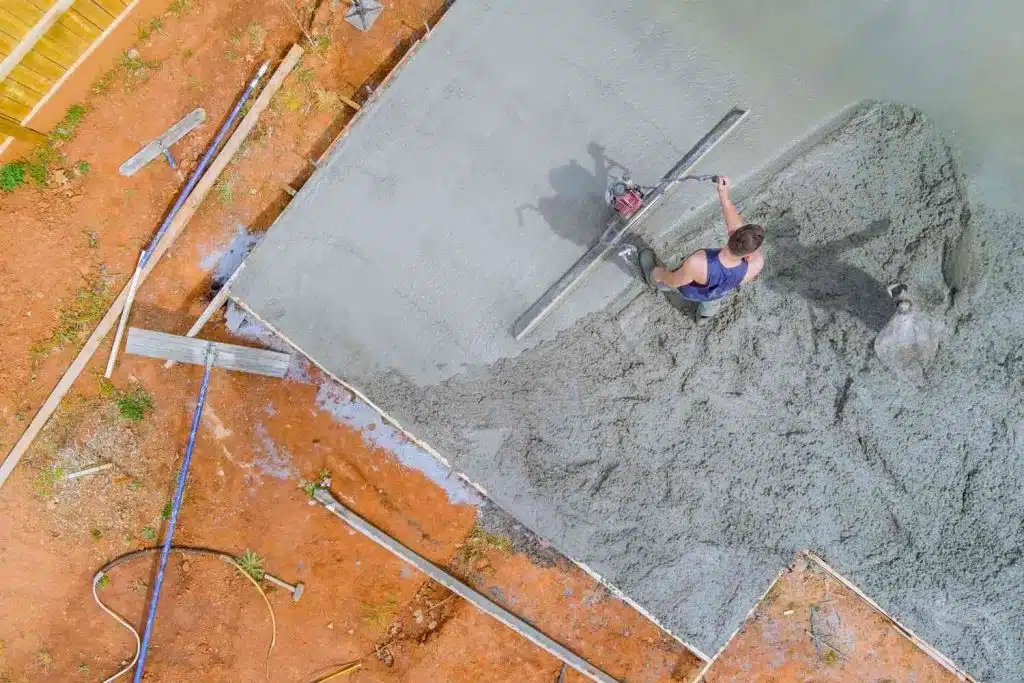
A concrete slab foundation involves excavating the site to a uniform depth, compacting a gravel base for drainage, and pouring a reinforced concrete pad—typically four to six inches thick. In colder climates, the slab edges extend below the frost line to prevent heave, creating what’s known as a frost-protected slab.
Best For:
Slab foundations are ideal for ground-level sunrooms on sites with stable, well-drained soil. They work particularly well for three-season and four-season sunrooms where you want a finished floor at or near ground level. Tile, stone, and radiant heating systems install beautifully over a slab.
Considerations:
Slabs require proper site preparation. Poor drainage beneath the slab leads to moisture problems and cracking. In areas with expansive clay soil, additional engineering may be needed to prevent movement. Once poured, plumbing and utility modifications become difficult and expensive, so plan these details before construction begins.
Pier and Beam Foundations
Pier and beam foundations use concrete columns—piers—driven or poured deep into the ground, connected by horizontal beams that support the sunroom floor structure above. This elevates the sunroom off the ground, creating a crawl space beneath.
How It Works:
Concrete piers are placed at calculated intervals based on the sunroom’s weight and dimensions. Each pier extends below the frost line to resist heave. Steel or pressure-treated wood beams span between the piers, and a floor system is built on top. The result is a strong, elevated platform for your sunroom.
Best For:
Pier foundations excel on sloped or uneven terrain where grading for a slab would be impractical or too expensive. They’re also the preferred choice for sites with poor drainage, high water tables, or flood-prone areas, since the elevation keeps the sunroom above potential water levels. Pier foundations work well for elevated decks that are being converted into enclosed sunrooms.
Considerations:
The crawl space beneath a pier foundation needs proper ventilation and moisture barriers to prevent humidity buildup, mold, and pest intrusion. Pier foundations also require insulated flooring to prevent cold air from rising through the floor in winter. While they handle difficult terrain well, they typically cost more than a simple slab due to the additional structural components.
Crawl Space Foundations
A crawl space foundation combines elements of both slabs and piers. It features continuous perimeter walls—usually poured concrete or concrete block—that extend below the frost line, with a floor structure built across the top.
How It Works:
Perimeter walls are excavated and built around the sunroom footprint, extending below the frost line. The interior may have additional support piers or footings. A floor system spans the walls, and the enclosed space beneath provides access for utilities, plumbing, and future maintenance.
Best For:
Crawl space foundations are an excellent choice when you need utility access beneath the sunroom or when site conditions make a slab impractical but you still want a fully enclosed base. They’re common in regions with moderate to deep frost lines and work well when the sunroom floor needs to match the height of the existing building’s floor—a critical detail for seamless indoor-outdoor transitions.
Considerations:
Crawl spaces require proper waterproofing, drainage, and vapor barriers to prevent moisture problems. They’re more expensive than slabs due to the wall construction and floor framing. However, the long-term flexibility they provide for maintenance and utility access can offset the higher upfront cost.
Helical Pile Foundations
An increasingly popular modern option, helical piles are steel shafts with spiral plates that are screwed into the ground using hydraulic equipment. They provide deep, stable support with minimal site disruption.
How It Works:
Helical piles are driven into the ground until they reach stable, load-bearing soil—sometimes 10 to 20 feet deep. Each pile’s capacity is verified during installation by monitoring torque resistance. Beams connect the pile caps to support the sunroom structure above.
Best For:
Helical piles are ideal for challenging soil conditions—soft ground, fill, high water tables, or sites where traditional excavation would be difficult. They’re also the preferred foundation for environmentally sensitive areas because installation creates minimal ground disturbance and no concrete waste. Projects with tight timelines benefit as well, since helical piles can be installed in a single day with no curing time required.
Considerations:
Helical piles require specialized equipment and experienced installers, which can limit availability in some areas. Costs vary based on depth, soil conditions, and the number of piles required. They’re not always the most economical choice for straightforward sites where a simple slab would perform well.
Key Factors in Choosing Your Foundation
No single foundation type is universally best. The right choice depends on several site-specific factors that should guide your decision.
Soil Conditions
Stable, well-compacted soil supports slabs effectively. Sandy, clay-heavy, or fill soils may require piers or helical piles to reach load-bearing strata. A soil test before construction eliminates guesswork and prevents costly surprises.
Climate and Frost Depth
In regions with deep frost lines, your foundation must extend below the freeze point to prevent heave. This requirement influences both the foundation type and cost. Frost-protected slabs, deep piers, and helical piles all address this challenge differently.
Drainage and Water Table
Sites with poor drainage or high water tables favor elevated foundations—piers or helical piles—that keep the sunroom above moisture problems. Proper grading and drainage systems are essential regardless of foundation type.
Building Codes and Permits
Local codes dictate minimum foundation requirements for your area. These regulations exist to ensure structural safety and vary significantly by region. Working with an experienced builder who understands local requirements prevents costly compliance issues.
Build on a Solid Foundation with Sunshine Rooms
At Sunshine Rooms, we don’t take shortcuts with foundations. Every sunroom project begins with a thorough site evaluation to determine the best foundation type for your specific conditions. Our team engineers each foundation to meet or exceed local building codes, ensuring your sunroom stands strong for decades.
We’ve built sunrooms on every foundation type discussed here, and we know exactly which approach delivers the best results for each unique situation. When you work with Sunshine Rooms, you’re building on experience, precision, and a commitment to lasting quality.
Ready to start your sunroom project on the right foundation? Contact Sunshine Rooms today for a consultation tailored to your property and vision.
Related Posts

We Like to Hear From You!
We service and support the products we manufacture and install. If you need assistance with
our products or those of another sunroom manufacturer, contact us!