
Foggy glass, dripping frames, and moisture pooling on window sills—condensation is one of the most common frustrations sunroom owners face, especially during colder months. Left unchecked, it can lead to mold growth, wood rot, and seal degradation. But it’s also one of the most preventable problems when you understand what’s actually causing it.
Here’s the key insight most people miss: condensation isn’t a window defect. It’s a physics problem driven by humidity, temperature, and the surfaces in your sunroom. Once you understand that, every solution becomes straightforward.
Why Condensation Forms in Sunrooms
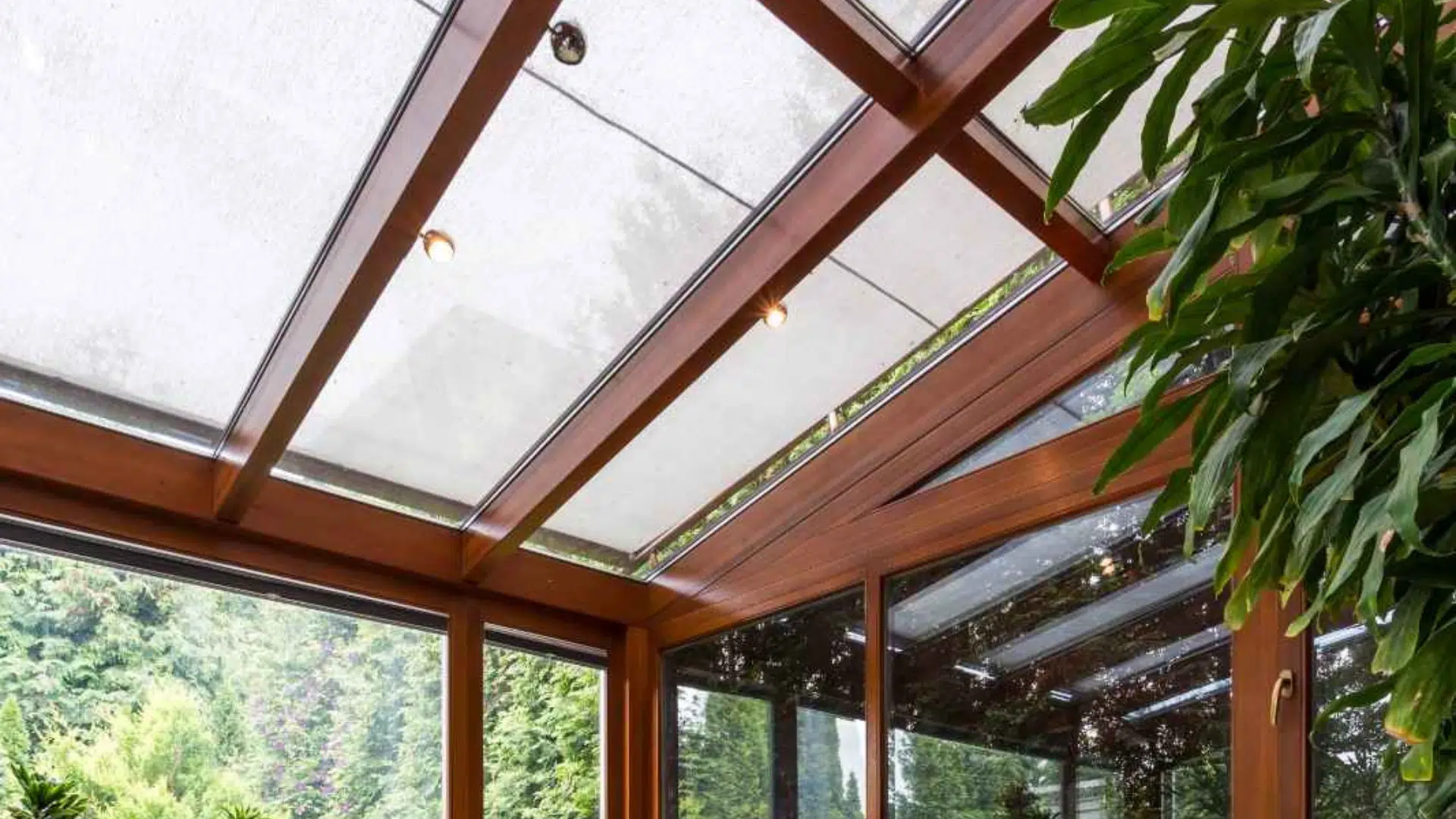
Condensation appears the moment warm, moisture-laden indoor air contacts a surface cold enough to drop it below its dew point—the temperature at which water vapor turns to liquid. Your sunroom is especially vulnerable because it has far more glass surface area than a standard room, and glass is almost always the coldest surface in any space.
Three factors interact to create the problem:
- Indoor humidity: The higher your indoor relative humidity (RH), the higher the dew point, meaning condensation can form on warmer surfaces.
- Indoor air temperature: Most conditioned sunrooms sit between 68-72°F.
- Glass surface temperature: Driven by outdoor temperature and the thermal performance of your glazing and frames.
When outdoor temperatures drop, your glass gets colder. If your indoor air carries enough moisture, the glass surface temperature falls below the dew point, and water forms. It’s the same reason a cold glass sweats on a humid summer day—just happening on your sunroom windows instead.
How Much Humidity Is Too Much?
The answer depends on how cold it is outside. For a home maintained at 70°F indoors, here are the maximum recommended indoor humidity levels to avoid condensation on standard double-pane windows:
| Outdoor Temperature | Maximum Indoor Humidity |
| 20°F to 40°F | 40% |
| 10°F to 20°F | 35% |
| 0°F to 10°F | 30% |
| -10°F to 0°F | 25% |
| -20°F or below | 15% |
These thresholds shift dramatically based on your window type. At 0°F outdoors with 70°F indoor air, single-pane glass begins condensing at just 12% indoor humidity—a level so low it’s nearly impossible to maintain in a lived-in space. Double-pane Low-E glass with argon fill raises that threshold to approximately 37%, making it far more forgiving. Triple-pane glass pushes the tolerance even higher.
An inexpensive hygrometer (available for under $15) placed in your sunroom gives you a real-time read on your humidity level. It’s the single most useful condensation-prevention tool you can own.3
Surface Condensation vs. Seal Failure—Know the Difference
Before you troubleshoot, determine which type of condensation you’re dealing with. The causes and solutions are completely different.
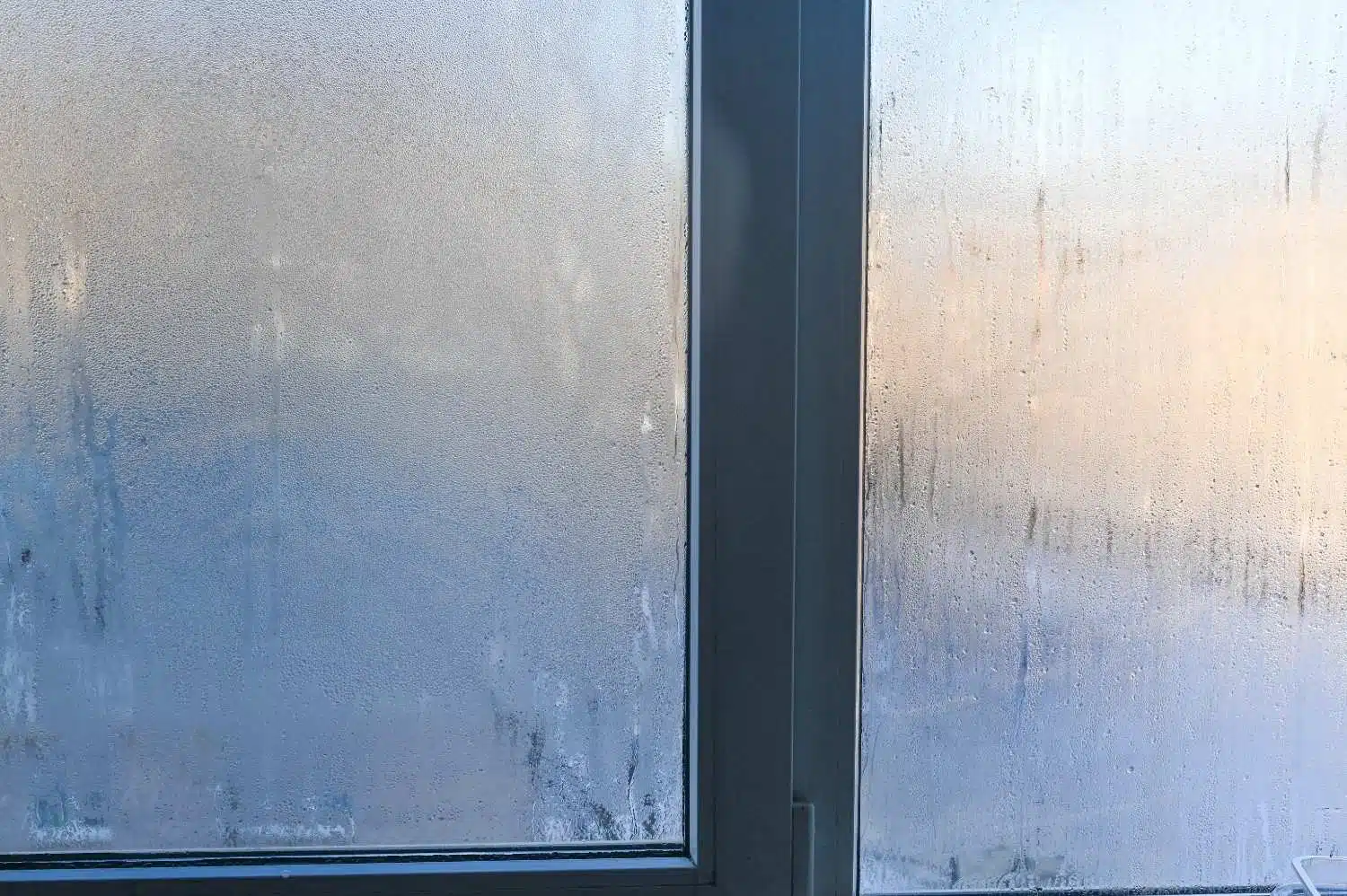
Surface condensation appears on the interior face of the glass. You can wipe it away with your hand. It typically appears during cold snaps or after cooking, showering, or running a humidifier nearby. This is a humidity management problem—solvable with the strategies in this guide.
Inter-pane condensation appears as fog or haze trapped between the glass layers of a double- or triple-pane window. It cannot be wiped away and usually doesn’t clear on warm days. This indicates a seal failure—the airtight seal between panes has broken, allowing moist air to enter the insulating space. When this happens, the argon or krypton gas fill escapes, and the window loses much of its insulating performance. The only fix is replacing the insulated glass unit.
Quick test: Run your finger across the moisture. If it smears, it’s surface condensation. If the fog doesn’t respond to touch, it’s between the panes—call a glass professional.
Proven Solutions for Preventing Condensation
Once you’ve confirmed you’re dealing with surface condensation, these strategies address the root causes.
Control Indoor Humidity
This is the most direct and effective solution. Target 30-50% indoor relative humidity year-round. Common humidity sources in sunrooms include houseplants, wet footwear, open connections to kitchens or bathrooms, and aquariums. A standalone dehumidifier rated for your space size can bring humidity under control quickly. For a typical 200-square-foot sunroom, a 30-pint-per-day unit provides enough capacity to handle moderate to high humidity conditions.
Improve Ventilation
Ventilation exchanges moist indoor air with drier outside air—and in winter, outdoor air almost always carries less absolute moisture than heated indoor air, even when outdoor humidity readings appear high. Options range from simple trickle vents built into window frames to mechanical ventilation systems. In cold climates, a heat recovery ventilator (HRV) is the ideal solution—it exhausts moist indoor air while capturing the heat from it to warm incoming fresh air, preventing both condensation and energy waste.
One critical point: sealing every gap in your sunroom without providing ventilation can actually make condensation worse. A sealed room traps the moisture generated by occupants and activities with no path for it to escape, causing indoor humidity to climb. The correct approach is controlled sealing combined with controlled ventilation.
Upgrade Your Glazing
Better glass keeps the interior surface warmer, which is the most reliable way to prevent condensation at normal humidity levels. The performance gap is dramatic:
- Single-pane glass provides minimal insulation, and the interior surface closely tracks outdoor temperatures. Condensation is nearly unavoidable in cold weather at any livable humidity level.
- Double-pane Low-E glass with argon fill keeps the interior surface substantially warmer, roughly tripling the humidity tolerance before condensation occurs.
- Triple-pane glass maintains the warmest interior surface, allowing comfortable indoor humidity levels even in severe cold without condensation.
If your sunroom has single-pane glass and you’re battling chronic condensation, upgrading to double- or triple-pane Low-E glazing is the most impactful long-term investment you can make.
Install Thermally Broken Frames
Even with high-performance glass, standard aluminum frames can be a weak link. Aluminum conducts heat rapidly, making the interior frame surface cold enough to condensate even when the glass itself stays dry. Thermally broken frames use a low-conductivity polyamide insert between the interior and exterior aluminum profiles, dramatically reducing heat transfer through the metal. This keeps the frame surface warmer and significantly reduces frame condensation.
Direct Warm Air Across the Glass
This is a commonly overlooked strategy. Heating units should direct warm airflow across the coldest surfaces—your glass—not away from them. Placing a heating vent, baseboard heater, or ductless mini-split so it sends warm air along the glass surface raises that surface temperature and disrupts the cold air layer that naturally pools against windows. This is one of the easiest and most immediate ways to reduce condensation in an existing sunroom.
Use Ceiling Fans as a Supplement
A ceiling fan running at low speed in winter (clockwise from below, pushing warm ceiling air down along walls) helps prevent cold air from stratifying near the glass. This can reduce condensation by keeping a consistent air temperature across the room. However, ceiling fans don’t remove moisture from the air—they don’t lower humidity. Think of them as a helpful supplement to humidity control and ventilation, not a standalone fix.
What Happens If You Ignore Persistent Condensation
Occasional, brief condensation that clears on its own is normal and harmless. Persistent condensation—recurring daily or lasting hours at a time—is a different story.
Mold growth can begin within 24-48 hours of sustained surface moisture on organic materials like wood frames, caulk lines, and window sill trim. Under favorable conditions (warmth, moisture, and an organic food source), visible colonies can appear in one to three days. Sunrooms provide all three conditions when heated during winter.
Wood rot develops more slowly but is structurally more damaging. Framing and trim that stays consistently damp from condensation can begin deteriorating within weeks to months. Unlike mold, which can be cleaned, rot requires replacement of the affected material.
Seal and caulk degradation is a compounding problem. Persistent moisture breaks down the sealant around frames and glass, creating pathways for additional moisture infiltration—which leads to more condensation, which leads to more seal damage. Breaking this cycle early is far cheaper than repairing the downstream effects.
Common Condensation Myths Worth Debunking
“New windows shouldn’t have any condensation.” Actually, new high-performance windows sometimes show more condensation than the old, leaky ones they replaced. The reason? Old windows let humid indoor air escape through gaps constantly, keeping indoor humidity artificially low. Tightly sealed new windows keep that moisture inside, revealing a pre-existing humidity condition. The window isn’t the problem—it’s doing its job. Adjust your ventilation and humidity control to match your improved airtightness.
“Exterior condensation means the window is defective.” The opposite is true. Condensation forming on the outside face of your glass means the window is insulating so well that the outer pane stays cool enough for outdoor dew to form on it. This is a sign of high thermal performance, not a flaw.
“Running a humidifier will help a cold sunroom feel better.” Adding moisture to a space already prone to condensation will directly worsen the problem by raising the dew point. If your sunroom feels cold, address the heating—not the humidity.
Start with What You Can Measure
Condensation prevention comes down to keeping the dew point of your indoor air below the temperature of your coldest surface. You can’t control the weather, but you can control your indoor humidity, improve your glass and frame performance, and direct warm air where it’s needed most.
The first step is simple: put a hygrometer in your sunroom, check the humidity against the outdoor temperature, and adjust from there. If you’re planning a new sunroom or considering upgrades to an existing one, the team at Sunshine Rooms can help you choose the right glazing, framing, and ventilation approach for your climate.




We Like to Hear From You!
We service and support the products we manufacture and install. If you need assistance with
our products or those of another sunroom manufacturer, contact us!