
Your solarium floor takes more punishment than any other surface in the room. It absorbs hours of direct sunlight, endures temperature swings that can reach 30-50°F in a single day, and deals with condensation that other rooms never see. Choose the wrong material, and you’ll be looking at fading, warping, or moisture damage within a few years. Choose the right one, and your floor will look great and perform well for decades.
Here’s a practical comparison of the best flooring options for solariums—what works, what doesn’t, and why.
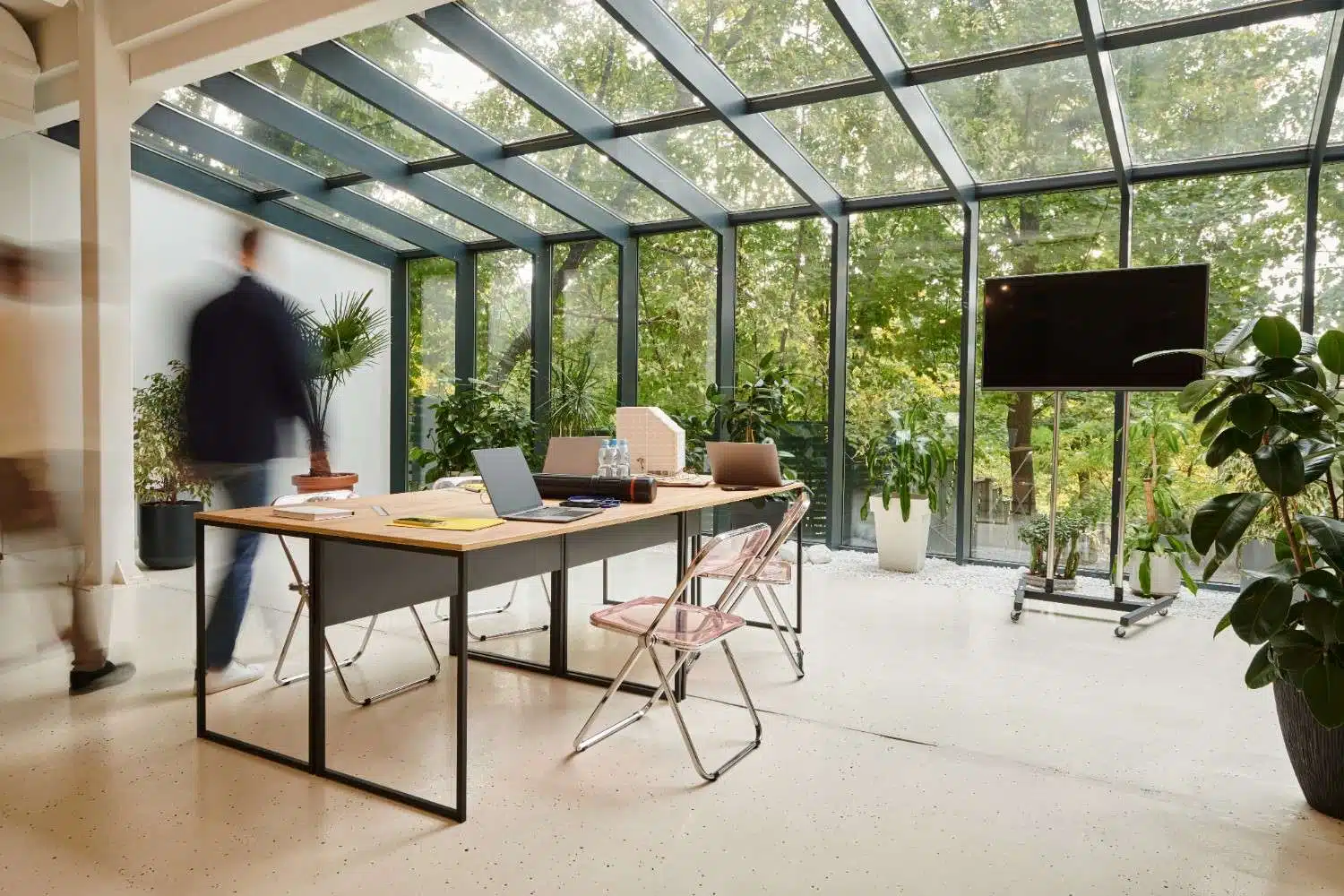
What Makes Solarium Flooring Different
A solarium isn’t a standard room. The extensive glazing creates an environment with unique demands on your flooring:
- UV exposure: Hours of direct sunlight can fade colors, break down finishes, and degrade adhesives over time.
- Temperature fluctuations: Without climate control, a solarium can swing from near-freezing on a winter night to over 100°F on a sunny afternoon.
- Moisture: Condensation is common, especially during colder months. Any flooring that absorbs and traps moisture becomes a mold and mildew risk.
- Thermal mass potential: In a south-facing solarium, a floor that absorbs daytime heat and releases it slowly after sundown can meaningfully reduce heating needs—a passive solar benefit that certain materials deliver and others don’t.
The best solarium flooring handles all four of these challenges well. Here’s how each option stacks up.
Porcelain Tile — The Top Performer
Porcelain tile is the most consistently recommended flooring for solariums, and the data backs it up.
Color in porcelain is fired into the tile body at temperatures exceeding 2,300°F. UV radiation simply cannot break down a fired ceramic body the way it degrades organic pigments—meaning porcelain will not fade from sunlight exposure under any practical timeline. Its water absorption rate of 0.5% or less (classified as “impervious” under ANSI/ASTM standards) makes it effectively waterproof at the tile level and highly resistant to thermal cycling stress. Condensation wipes right off.
Porcelain also delivers excellent thermal mass. It absorbs solar heat during the day and releases it gradually after sunset, helping moderate temperature swings—a genuine passive solar benefit in a south-facing solarium. Pair it with radiant floor heating, and porcelain becomes an ideal year-round surface.
Installed cost: $11-$26 per square foot. Lifespan: 50+ years with proper installation.
The one drawback? Porcelain can feel hard and cold underfoot in winter without radiant heat. Area rugs solve this easily.
Luxury Vinyl Plank — A Strong Option with Limits
Luxury vinyl plank (LVP) offers comfort, easy installation, and excellent moisture resistance at a lower price point than tile or stone. For a climate-controlled four-season solarium, it’s a compelling choice—but there are important caveats the flooring aisle won’t always mention.
Choose SPC-core over WPC-core. Stone plastic composite (SPC) has a rigid inorganic core that resists thermal expansion far better than the foamed core in wood plastic composite (WPC) products. For a room with meaningful temperature variation, this distinction matters.
Watch the temperature limit. Most LVP manufacturers cap the recommended surface temperature at 80-85°F. A dark vinyl floor in a south-facing solarium can exceed this on sunny days, even when air temperature feels comfortable. Glass amplifies radiant heat.
UV fading is real. Standard LVP without UV inhibitors will fade under prolonged direct sunlight. Premium products with UV-inhibiting wear layers (20-mil thickness or higher) resist this significantly better, but the claim that LVP is universally “UV-resistant” is overstated.
Check the warranty. Most LVP warranties require climate-controlled interior conditions. Installations in spaces that regularly exceed the stated temperature or humidity range may void coverage. Verify the specific product’s warranty language before committing.
Installed cost: $7-$13 per square foot. Lifespan: 10-25 years depending on UV exposure management and wear layer quality.
Natural Stone — Beautiful, with a Maintenance Commitment
Slate, travertine, and marble each bring a premium aesthetic to a solarium, but they differ significantly in how well they handle the environment.
Slate is the strongest natural stone option for solariums. It’s relatively UV-stable, its natural texture provides slip resistance in condensation-prone spaces, and it handles temperature swings well. Sealing is required but less frequent than with softer stones.
Travertine is porous and requires sealing every one to two years in a solarium environment. Its lighter coloration reflects solar radiation, keeping surface temperatures lower—useful in warm climates but reducing passive solar benefit. Avoid honed or unfilled travertine in moisture-prone solariums, as open pores trap water.
Marble is the least suited of the three. Iron-bearing marble yellows under sustained UV exposure. It etches from acidic cleaning products—and even from condensation containing dissolved CO2. The maintenance burden in a solarium is high relative to its durability in this specific environment. Reserve marble for fully climate-controlled spaces where it can be carefully managed.
All three provide good thermal mass and work well over radiant floor heating.
Installed cost: $13-$35 per square foot depending on stone type. Lifespan: 50-100 years structurally, with ongoing finish maintenance.
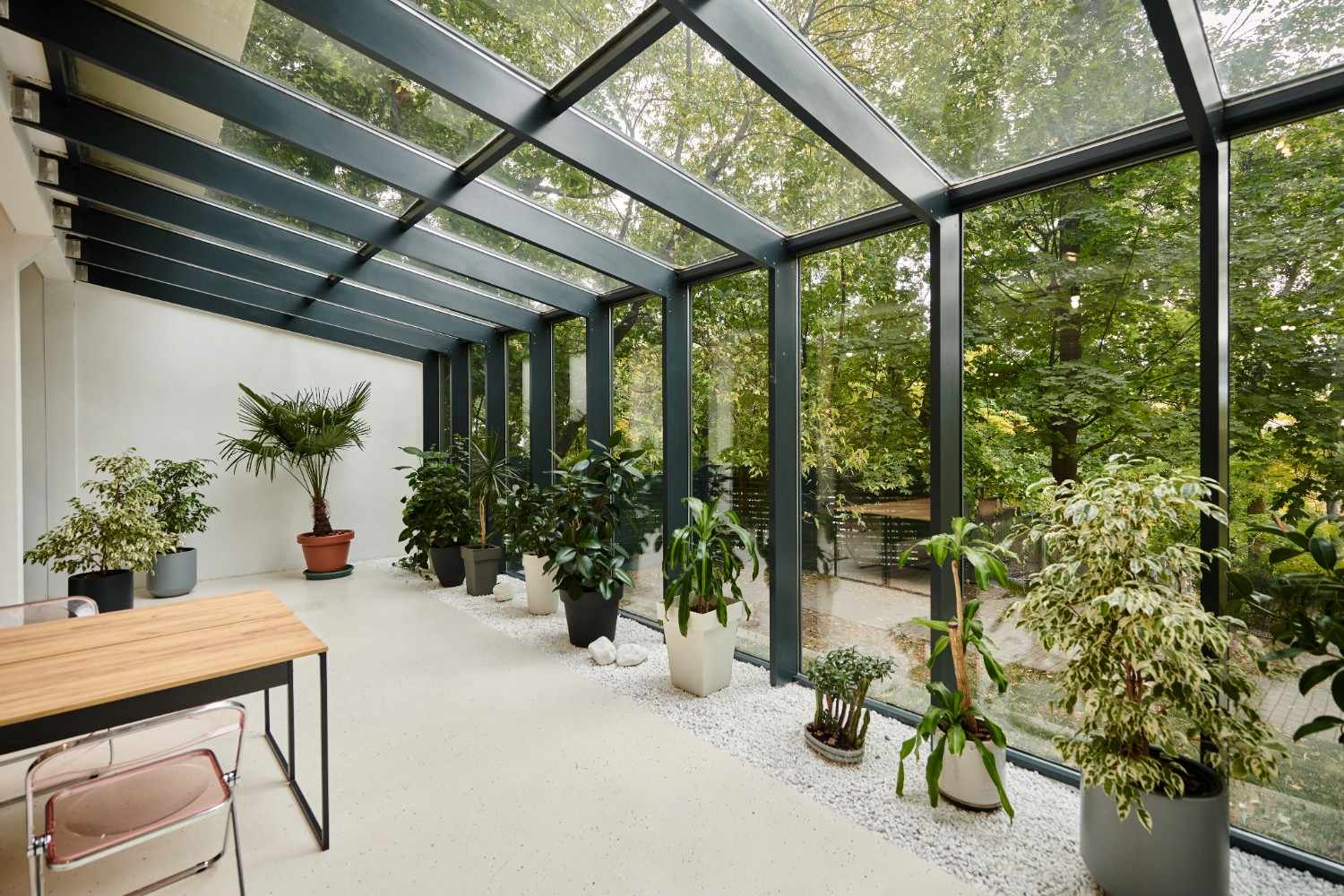
Polished Concrete — Maximum Thermal Mass, Minimal Cost
If your solarium is built on a concrete slab, polishing and staining the existing surface is one of the most cost-effective and high-performing options available.
Concrete is the benchmark material for passive solar thermal mass. It absorbs more heat per square foot than any other common flooring material and releases it slowly after sundown, actively moderating your solarium’s temperature swings. Integral mineral pigments and acid stains are UV-stable, so the finish won’t fade. With proper sealing, concrete handles moisture without issue.
Paired with radiant floor heating, polished concrete becomes a nearly ideal solarium surface—warm, durable, and maintenance-friendly.
The trade-offs: Concrete is hard and cold underfoot without radiant heat. Polished surfaces can be slippery when wet (non-slip sealer additives address this). Resealing is needed every three to five years. And existing slabs should be evaluated for cracks before applying a polished finish, since imperfections become more visible, not less.
Cost: $3-$15 per square foot depending on finish complexity. Lifespan: 50+ years with regular sealing.
What to Avoid in a Solarium
Solid hardwood is not suitable for solarium use. Wood expands and contracts with humidity changes—a 5-inch red oak board can shift nearly 3/32 of an inch with moderate humidity swings, and across a 10-foot floor, that adds up to nearly two inches of cumulative movement. Solariums without active humidity control can swing from 25% to 70%+ relative humidity seasonally, far outside the 35-55% range manufacturers require for warranty coverage. The result is cupping, gapping, and buckling.
Engineered hardwood is more stable thanks to its cross-ply construction (roughly 68% less movement than solid), but it still requires the room to stay within 60-80°F and 35-55% humidity year-round. This only works in a fully climate-controlled four-season solarium—essentially an interior room.
Standard carpet traps moisture, fades under UV exposure within a few years, and provides no thermal mass. It’s a mold risk in a condensation-prone space. Outdoor-rated carpet tiles engineered for UV and moisture resistance are a different product category and can work in climate-controlled solariums, but standard broadlooms should be avoided.
Laminate is moisture-sensitive and not suitable for the condensation and humidity conditions common in solariums.
Quick Comparison Table
| Material | UV Resistance | Moisture Resistance | Thermal Mass | Installed Cost/sq ft | Lifespan |
| Porcelain tile | Excellent | Excellent | Good | $11-$26 | 50+ years |
| LVP (SPC-core) | Good (premium) | Excellent | None | $7-$13 | 10-25 years |
| Slate | Good | Good (sealed) | Good | $13-$25 | 50-100 years |
| Polished concrete | Excellent | Good (sealed) | Best | $3-$15 | 50+ years |
| Engineered hardwood | Fair | Fair | None | $7-$20 | 10-20 years* |
| Travertine | Fair | Fair (sealed) | Good | $13-$28 | 50-100 years |
*In a solarium environment; longer in climate-controlled interiors.
Choosing the Right Floor for Your Solarium
The best flooring depends on your priorities. Porcelain tile and polished concrete lead on durability, UV resistance, and thermal mass—making them the top performers in most solarium environments. SPC-core luxury vinyl offers the best balance of comfort and cost for climate-controlled four-season spaces. Natural stone adds a premium aesthetic, with slate being the most practical choice for the conditions.
Whatever material you choose, make sure it’s rated for the UV exposure, temperature range, and moisture conditions your solarium actually experiences—not just what a standard interior room would demand. If you’re planning a new solarium or upgrading an existing floor, the team at Sunshine Rooms can help you match the right flooring to your specific design and climate.
Related Posts

We Like to Hear From You!
We service and support the products we manufacture and install. If you need assistance with
our products or those of another sunroom manufacturer, contact us!