
A solarium’s glass roof is its best feature and its most exposed one. When a hailstorm rolls through, that overhead glass takes the direct hit—and a severe storm can crack panels, shatter glazing, or leave stress fractures that fail later. For homeowners in hail-prone regions, protecting the solarium isn’t an afterthought; it’s part of building one that lasts.
The good news is that hail damage is largely preventable with the right combination of glazing, physical barriers, and design choices. Here’s how to protect a solarium from hail, from the glass up.
Why the Roof Is the Weak Point
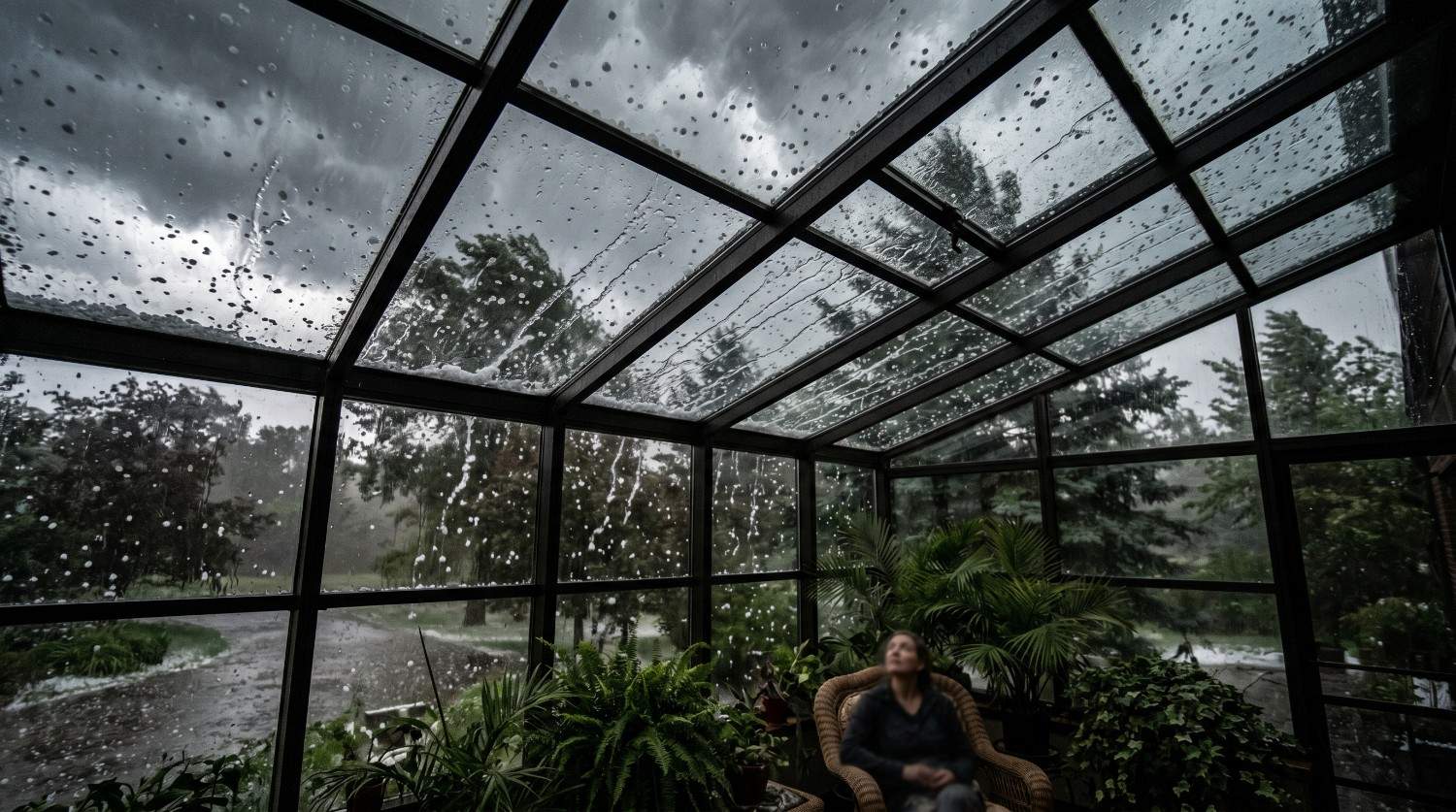
Hail falls from above, which means the roof glazing absorbs the most direct impact while the vertical walls are struck only at glancing angles. That makes the roof the part of any solarium most vulnerable to hail, and the part worth protecting first.
Two factors determine how much damage a storm does: the size and speed of the hailstones, and the impact resistance of what they hit. You can’t control the weather, but you have full control over the second factor. The materials and design you choose are what stand between a passing storm and a cracked roof.
Start With Impact-Resistant Glazing
Your single most important defense is the glass itself. Not all glazing handles impact the same way, and choosing the right type during the build is far cheaper than replacing a roof after a storm.
Tempered glass. Tempered glass is heat-treated to be roughly four to five times stronger than standard annealed glass. It resists impact far better and, if it does break, crumbles into small blunt pieces rather than dangerous shards. Tempered glass is the minimum standard for any overhead solarium glazing and provides solid protection against moderate hail.
Laminated glass. Laminated glass bonds two panes together with a tough interlayer (the same technology used in car windshields). Even if the outer pane cracks under a hard hailstone, the interlayer holds the glass together so the roof doesn’t fail or fall through. For serious hail protection, laminated—or laminated-over-tempered—glazing is the strongest glass option.
Polycarbonate roof panels. Polycarbonate is a near-unbreakable plastic glazing that’s many times more impact-resistant than glass and is one of the best choices in heavy-hail regions. It’s lighter, won’t shatter, and shrugs off impacts that would crack glass. The trade-offs are a less premium appearance and more thermal movement than glass, but for a roof that has to survive repeated hailstorms, polycarbonate is hard to beat.
Impact-rated glazing. In storm-prone regions, impact-rated or hurricane-rated glazing assemblies are engineered and tested to withstand high-energy impacts. If you’re in an area that sees both hail and high winds, this is worth specifying.
Add a Physical Barrier
Beyond the glazing, a physical layer over or above the roof intercepts hail before it reaches the glass.
Hail guards and protective screens. Metal mesh or screen systems can be installed above the roof glazing to break up and slow falling hail. They reduce the energy that reaches the glass while still letting light through. These are a popular retrofit for existing solariums in hail country.
Retractable awnings and exterior shades. Exterior shading systems do double duty: they cut solar heat gain in summer and, when deployed, provide a buffer layer over the roof glass during a storm. A retractable awning won’t stop the largest hail, but it softens moderate impacts and adds a line of defense. (For more on exterior shading systems, see our guide to custom sunshades.)
Temporary covers. In areas where storms are predictable, some owners deploy temporary protective covers when severe weather is forecast. It’s a low-tech option, but for a prized solarium it can prevent a costly repair.
Design Choices That Help
How the solarium is built and sited affects how it weathers hail, and these decisions are easiest to make before construction.
Roof pitch. A steeper roof pitch encourages hail to strike at an angle and deflect rather than hit dead-on, reducing the force transferred to the glass. A steeper roof also sheds debris and water more effectively, which protects seals over time.
Quality framing and secure glazing. Strong, thermally broken aluminum framing with properly seated glazing gaskets keeps panels secure under impact. Loose or poorly seated glass is more likely to crack or dislodge.
Siting and surroundings. Where practical, positioning a solarium where it gets some shelter—near the house’s roofline or existing tree cover—can reduce direct exposure. Be cautious with overhanging trees, though, since they drop their own debris and limbs in storms.
After the Storm — Inspection and Insurance
Even a well-protected solarium should be checked after a significant hailstorm, because some damage isn’t obvious right away.
Inspect promptly. After a hailstorm, look for chips, cracks, and stress fractures in the glass, and check the glass-to-frame seals and roof flashing for damage. Small fractures can spread and seal failures can let water in, so catching them early prevents bigger problems. Never walk on roof glass to inspect it—view it from below or from a safe vantage point.
Watch the seals. Impact can compromise seals even when the glass survives. If you notice fogging between panes or new leaks after a storm, a seal may have failed. (Our guide on how long sunroom seals last covers the warning signs.)
Know your coverage. Hail damage to a permanently attached solarium is often covered under homeowner’s insurance, but policies vary. It’s worth confirming your coverage and documenting your solarium’s construction before storm season, so a claim goes smoothly if you ever need to file one.
Building a Solarium That Stands Up to Hail
Protecting a solarium from hail comes down to layering your defenses: start with impact-resistant glazing—tempered, laminated, or polycarbonate—as the foundation, add a physical barrier like hail guards or exterior shades where the risk is high, and design the roof pitch and framing to deflect and withstand impact. Then stay on top of inspections after storms so small damage never becomes a major repair.
If you’re building in a hail-prone region or want to upgrade an existing solarium for better storm resistance, the team at Sunshine Rooms can recommend the right glazing and protection for your climate and design a room built to weather it.


We Like to Hear From You!
We service and support the products we manufacture and install. If you need assistance with
our products or those of another sunroom manufacturer, contact us!