
Anyone shopping for a pool enclosure runs into the same fork in the road early. One option slides or telescopes open so the pool can be uncovered on a nice day. The other is a permanent glazed building that stays put year-round. Both are marketed as extending your swimming season, and the brochures make them sound like variations on one idea.
They aren’t. Retractable and fixed enclosures differ in cost, comfort, permitting, insurance, and how much of the year the pool is genuinely usable. So how do retractable pool enclosures compare to fixed ones? Here’s an honest side-by-side, including the tradeoffs each type asks you to accept.
What Each Type Actually Is
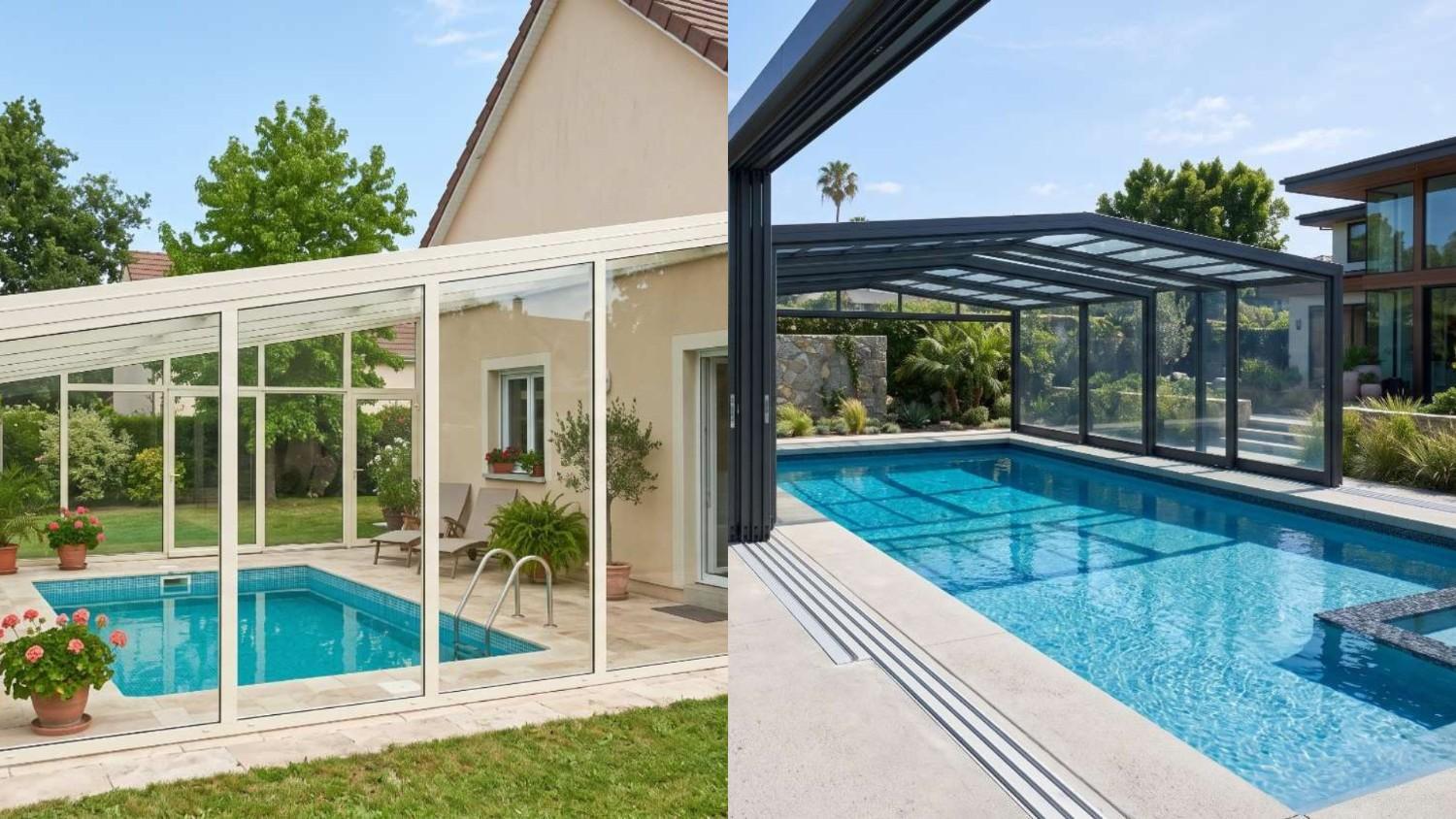
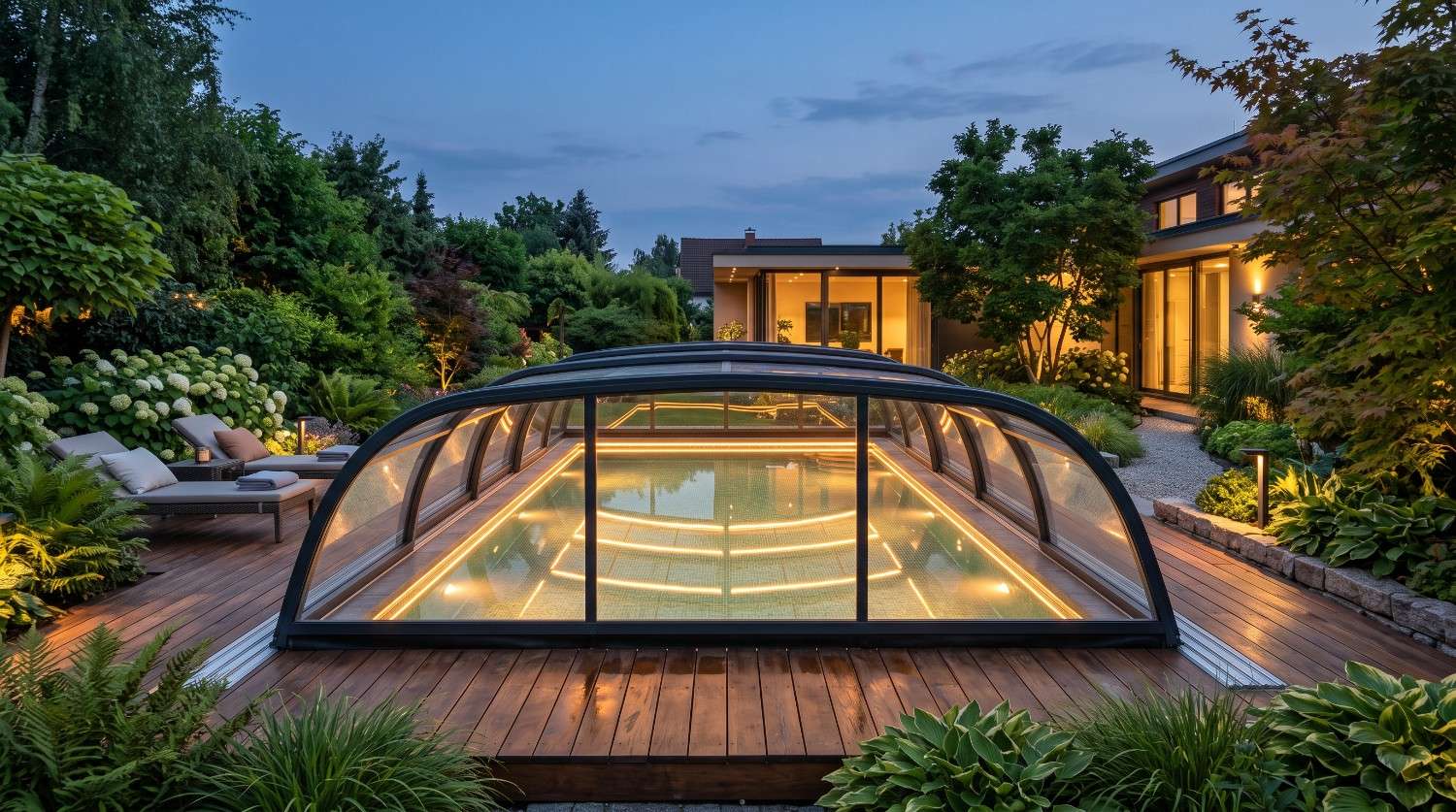
Retractable enclosures are typically low-profile aluminum frames with polycarbonate panels that slide on tracks, telescoping into a stacked position at one end of the pool. Heights range from low covers you can’t walk under to full-height models. They open in minutes, manually or by motor, converting the pool between covered and open.
Fixed enclosures are permanent structures. A framed, glazed building over the pool, engineered like any other addition, with real walls, a roof, doors, and usually heating and ventilation. It doesn’t open, though windows, vents, and doors do.
The short version: a retractable enclosure is a convertible cover. A fixed enclosure is a room.
Comparison at a Glance
| Factor | Retractable | Fixed |
| Typical cost | Lower, often $15,000–$70,000 | Higher, often $75,000–$250,000+ |
| Open-air swimming | Yes, opens in minutes | No, though windows and doors open |
| Winter usability | Limited; hard to heat to comfort | Full, when heated and insulated |
| Permanent structure | Usually not | Yes |
| Permits and codes | Sometimes minimal | Full building permit and engineering |
| Insurability | Often treated as equipment | Insurable as a permanent structure |
| Moving parts | Tracks, rollers, seals, motors | Few, mainly doors and vents |
| Adds home value | Rarely counted | Typically counted as square footage |
| Snow and wind loads | Varies widely by model | Engineered to local load requirements |
Cost, Upfront and Over Time
Retractable systems win clearly on initial price. A modest telescopic enclosure can cost a fraction of a permanent building, which is the main reason people choose one.
The long-run picture is more even. Retractable enclosures have consumable parts. Tracks, rollers, seals, and motors wear and eventually need service or replacement. Polycarbonate panels yellow and can craze with UV exposure over 10 to 15 years, and panel replacement is a recurring expense. A fixed enclosure costs far more once, then behaves like the rest of your house, with glass and framing that last decades.
Heating costs also diverge. A low-profile retractable enclosure with a vinyl sweep at the base is not an insulated envelope, so heating one to comfortable air temperature in winter is expensive and often impractical. Insulated glazing in a fixed structure holds heat well enough to make winter use affordable.
Year-Round Use Means Different Things
This is where the two types separate most sharply, and it’s worth being precise, because both are advertised as year-round.
A retractable enclosure extends the swimming season. It traps solar heat, holds warmth in the water, blocks wind, and keeps debris out. Swimmers stay comfortable in the water on cool days. What it generally doesn’t do is give you a warm room to stand around in when it’s 20°F outside.
A fixed enclosure creates a year-round room. Heated, insulated, and ventilated, it’s usable in January the way any other room in the house is. You can swim, sit, eat, and entertain in it regardless of the weather.
If your goal is a longer season and the option of open-air swimming, retractable delivers. If your goal is a genuine indoor pool that works in winter, fixed is the type that does it.
Permits, Engineering, and Insurance
This category gets overlooked until it becomes a problem.
Fixed enclosures are permanent buildings, which means a full permit, a stamped structural engineering report, and compliance with local snow load, wind load, and pool barrier codes. That’s more paperwork, and it’s also the reason they can be fully insured, appraised as living space, and safely rated for your region’s weather.
Retractable systems occupy murkier ground. Some are permitted as structures, some are treated as pool equipment, and load ratings vary enormously between a budget import and an engineered system. Before buying, ask specifically what snow and wind loads the model is rated for in your area, whether your municipality requires a permit, and whether your insurer will cover it. Verify it satisfies your local pool barrier and safety fencing requirements too, since a cover is not automatically a legal barrier.
Maintenance and Daily Living
Retractable enclosures ask for regular attention. Tracks need to stay clear of grit and leaves so panels roll smoothly, seals need checking, and in snowy climates you may need to clear accumulation the frame isn’t rated to hold. The reward is flexibility: cover it when the weather turns, open it when it’s beautiful.
Fixed enclosures ask for very little. Clean the glass, service the ventilation and heating, and check the seals periodically. The tradeoff is that the pool stays enclosed. Large operable windows and doors soften that considerably, but it never becomes an open-air pool.
Humidity matters in both, and more so in a fixed room. Any enclosed pool needs real ventilation or dehumidification to protect the structure and finishes from constant moisture.
Which One Fits Your Situation
Two questions usually settle it.
How much of the year do you want to use the pool, and how cold does it get? In a mild climate where the goal is stretching spring and fall, a retractable enclosure is efficient and cost-effective. In a climate with real winter, a fixed insulated structure is the only version that delivers comfortable year-round use.
Do you want a pool cover or a room? If the appeal is open-air swimming with weather protection on demand, retractable is the honest answer. If you picture using the space as a room, entertaining in it, and counting it as part of the house, that’s a fixed enclosure, and no retractable system will fully substitute.
Budget matters, but it’s the wrong place to start. Buying a retractable enclosure when you actually wanted a room usually ends with buying the room later anyway.
So, How Do Retractable Pool Enclosures Compare to Fixed Ones?
Retractable enclosures cost less, open to the sky, and extend the season well in moderate climates, at the price of ongoing maintenance, limited winter comfort, and uncertain permitting and insurance. Fixed enclosures cost substantially more and stay closed, but deliver a permanent, insurable, fully usable room that works in any weather and adds real space to the home.
If you’re weighing the two and want a clear picture of what a permanent, code-compliant, engineered pool enclosure would involve for your pool and climate, the team at Sunshine Rooms can walk you through the design, engineering, and cost of the fixed approach.

We Like to Hear From You!
We service and support the products we manufacture and install. If you need assistance with
our products or those of another sunroom manufacturer, contact us!