
One of the most common questions during sunroom planning is whether you can build a wide, open room without interior support posts breaking up the view. The answer is more flexible than most people expect—and the limits have less to do with building codes than with the materials and engineering you choose.
Here’s what actually determines how wide your sunroom can go, what each framing material can handle, and how to get a wider clear span when standard options fall short.
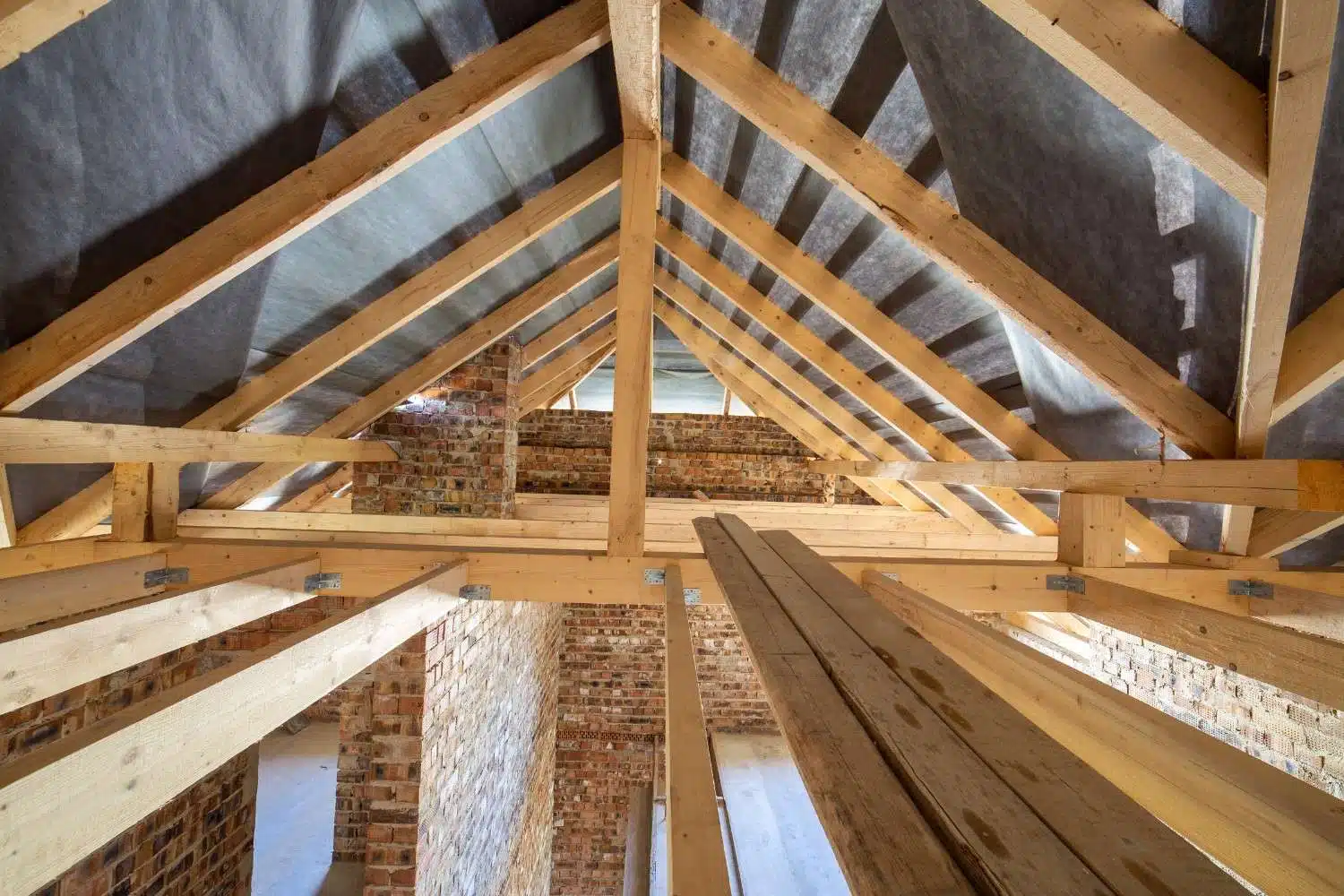
There’s No Code-Mandated Maximum Width
This surprises most property owners: no building code sets a specific width at which interior support posts become required. The National Sunroom Association (NSA) states directly that as long as a sunroom structure is shown to be structurally sound, current codes place no limit on clear-span width.
What codes do require is structural adequacy—your design must handle the gravity loads (roof weight, snow, maintenance access) and lateral loads (wind) specific to your location. Whether you meet that requirement with posts, beams, or an entirely post-free engineered system is a design decision, not a code mandate.
The practical limits come down to framing material, beam size, and what loads your roof needs to carry.
Clear-Span Limits by Framing Material
Different materials can span very different distances before interior support becomes necessary.
Standard Aluminum Systems: 10-16 Feet
Most prefabricated aluminum sunroom systems—the type offered by major manufacturers—are engineered for clear spans of roughly 10 to 16 feet without interior posts. The exact limit depends on panel thickness, aluminum extrusion profile, and the design loads for your area. Thicker insulated panels with structural cores push toward the upper end. Under lighter load conditions (low snow regions, moderate wind exposure), standard aluminum systems can reach approximately 16 feet. Under heavier loads—30 psf snow load or 100+ mph wind ratings—available spans shorten to 14-15 feet.
This is where most standard sunroom products top out. Beyond 16 feet, you’re moving into custom-engineered territory.
Engineered Wood (LVL): 16-30 Feet
Laminated veneer lumber (LVL) beams offer roughly two to three times the bending strength of standard dimensional lumber at the same depth. Multi-ply LVL beams are the most common solution for sunrooms wider than 16 feet.
General guidance by span (light to moderate roof load):
- 16-foot span: 2-ply LVL, approximately 14 inches deep
- 20-foot span: 3-ply LVL, approximately 16 inches deep
- 24-foot span: 3 or 4-ply LVL, 16-18 inches deep
These sizes are illustrative, not prescriptive—actual sizing depends on your specific loads, and a structural engineer must verify any beam selection for spans over 16 feet. But LVL makes 20-to-24-foot post-free sunrooms entirely feasible.
Glulam Beams: 20-40+ Feet
Glued laminated timber (glulam) beams are available in depths up to 36 inches and lengths up to 60 feet. They’re the go-to choice for long clear spans in post-and-beam construction and can handle 20-to-40-foot sunroom spans when properly sized. Glulam also works well as an exposed architectural element—its laminated wood grain is visually appealing, unlike stacked LVL that’s typically hidden in framing.
Steel Beams: 20-30+ Feet
Structural steel wide-flange (W-shape) beams provide the highest strength-to-depth ratio of any common framing material. A W8x28 steel beam can carry well over 24,000 pounds of uniform load across a 20-foot span—far more than a typical sunroom roof demands. For a 24-foot span, a W12x26 or W12x30 handles the load comfortably.
Steel is the preferred solution when you want maximum span with minimum beam depth, or when other materials simply can’t reach the width you need.
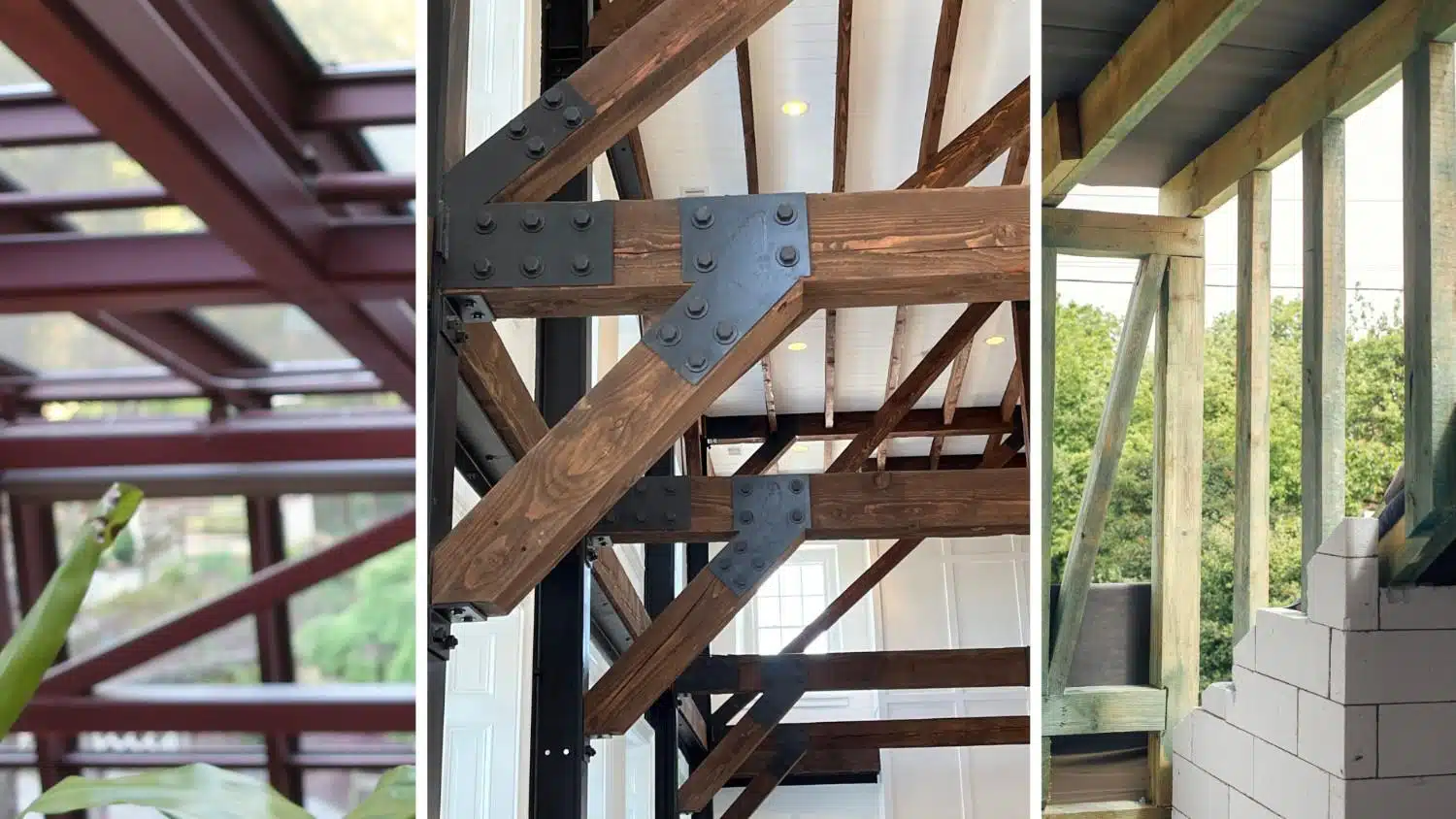
What Determines Your Maximum Span?
The same beam won’t span the same distance in every location. Several factors govern how wide you can go.
Snow Load
This is often the controlling factor in northern climates. Snow load ranges from 0 psf in South Florida to over 100 psf in mountain regions. A beam that clears 20 feet in Atlanta may need to be significantly deeper—or require posts—to handle the same width in Minneapolis or Denver.
Wind Load
Higher wind exposure requires more robust lateral resistance. In coastal or high-wind zones, your framing must handle both uplift forces and horizontal pressure, which affects beam sizing and connection design.
Roof Design
Flat and low-slope roofs (under 3:12 pitch) require a structural ridge beam by code. Cathedral and vaulted ceiling configurations also require structural ridge beams because there are no ceiling joists to resist the outward thrust of the rafters. A properly sized ridge beam actually helps wider spans by distributing roof load between the ridge and the perimeter walls—reducing the demand on any single beam.
Steeper pitched roofs with ceiling joists can use non-structural ridge boards and rely on the joists to handle rafter thrust, placing more load on the perimeter header.
Foundation and Connection Points
Wider clear spans concentrate more load at the beam endpoints. Your foundation must handle these increased point loads without settling. This may mean reinforced footings or piers at bearing points—an added cost, but not a deal-breaker.
Engineering Solutions That Eliminate Posts
If your desired width exceeds what standard products offer, several proven engineering approaches can get you there.
Oversized LVL or Glulam Beams
The most straightforward solution. Increasing beam depth and ply count extends the clear span. A 4-ply 18-inch LVL can clear-span 24 feet under typical residential roof loads. A glulam beam sized at 5-1/2 by 18 inches or larger handles similar spans with a more finished appearance.
Steel Beams
A single steel W-shape beam hidden in the roof framing can clear-span 20-30 feet with minimal depth. Steel is especially useful when headroom is limited and you can’t accommodate a deep wood beam. Installed cost for a long-span steel beam typically runs $1,200-$4,200, with complex installations reaching $6,000-$10,000.
Structural Ridge Beams
Rather than spanning the full width with a single perimeter beam, a structural ridge beam splits the roof load—half goes to the ridge, half to the perimeter walls. This effectively reduces the span demand on every beam in the system and is often the most economical path to a wider, post-free room.
Steel Moment Frames
Pre-engineered steel moment frame systems provide lateral resistance for wide openings without interior bracing. These can be installed by standard framing crews and are increasingly available as residential products.
Structural Insulated Panels (SIPs)
SIPs roof panels contribute structural capacity in addition to insulation. When combined with an LVL or glulam ridge beam, they can extend clear-span capability beyond what conventional framing achieves alone.
Common Sunroom Widths for Reference
To put this in context, here’s what’s typical in residential sunroom construction:
| Category | Width Range |
| Small sunroom | 8-12 feet |
| Standard / most common | 12-14 feet |
| Large sunroom | 14-20 feet |
| Extra-wide (custom engineered) | 20-30+ feet |
The most popular residential sunroom size is approximately 12 by 14 feet. Widths beyond 20 feet are uncommon in standard product lines but entirely achievable with engineered framing. In most cases, you’ll reach the upper end of your budget before you hit a structural wall.
What It Costs to Go Wider
Upgrading from a standard-width prefab system to a wider, post-free engineered design adds cost—but the premium is often smaller than expected.
- Structural engineering fees: $300-$1,000
- Beam material upgrade (LVL or steel): $500-$2,000 depending on span and material
- Potential foundation reinforcement at bearing points: varies by site
- Total premium over standard width: roughly $1,000-$5,000
For many property owners, paying this premium is well worth it to preserve an uninterrupted view and open floor plan.
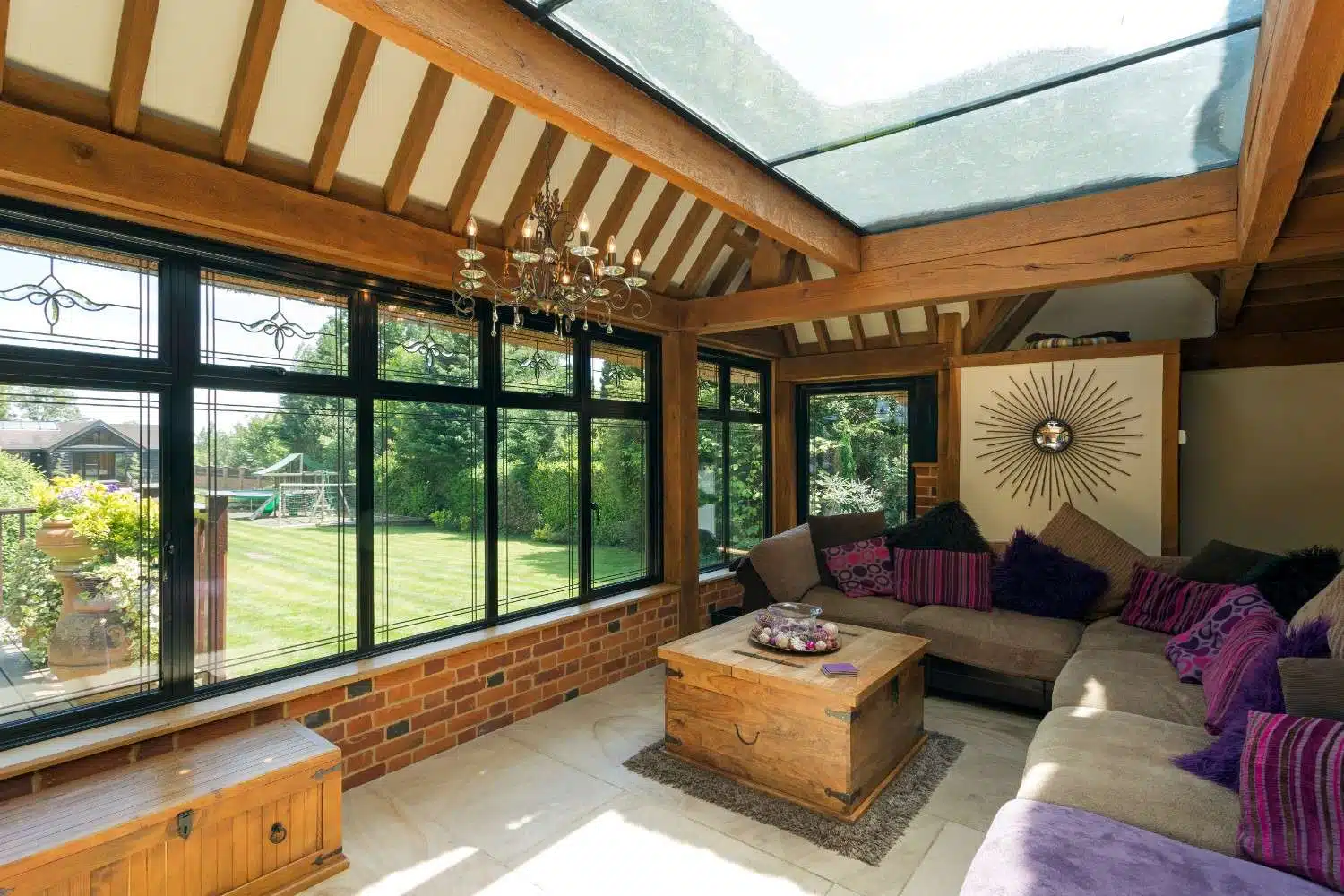
The Width You Want Is Probably Achievable
The most important takeaway: don’t assume you need interior posts just because your sunroom is wide. Standard prefab systems handle 10-16 feet cleanly. Engineered wood and steel push that to 20-30+ feet without posts. And no building code mandates a maximum post-free width—only that your structure is engineered to handle the loads.
The right approach is to start with your desired width, then work with a builder or engineer to determine the most cost-effective framing solution to achieve it. If you’re planning a sunroom and want to understand what’s possible for your specific width and site conditions, the team at Sunshine Rooms can help you explore your options.
Related Posts


We Like to Hear From You!
We service and support the products we manufacture and install. If you need assistance with
our products or those of another sunroom manufacturer, contact us!