
When you start researching sunrooms, two terms come up almost immediately: three-season and four-season. They look similar from the outside, and people often use the names loosely, but they’re fundamentally different products. One is a comfortable space for most of the year; the other is a true, year-round extension of your home.
Understanding the difference matters because it shapes everything—how the room is built, what it costs, how comfortable it is in January, and whether it adds to your home’s appraised value. Here’s a clear breakdown of what separates the two.
The Core Difference — Seasonal Use vs. Year-Round Use
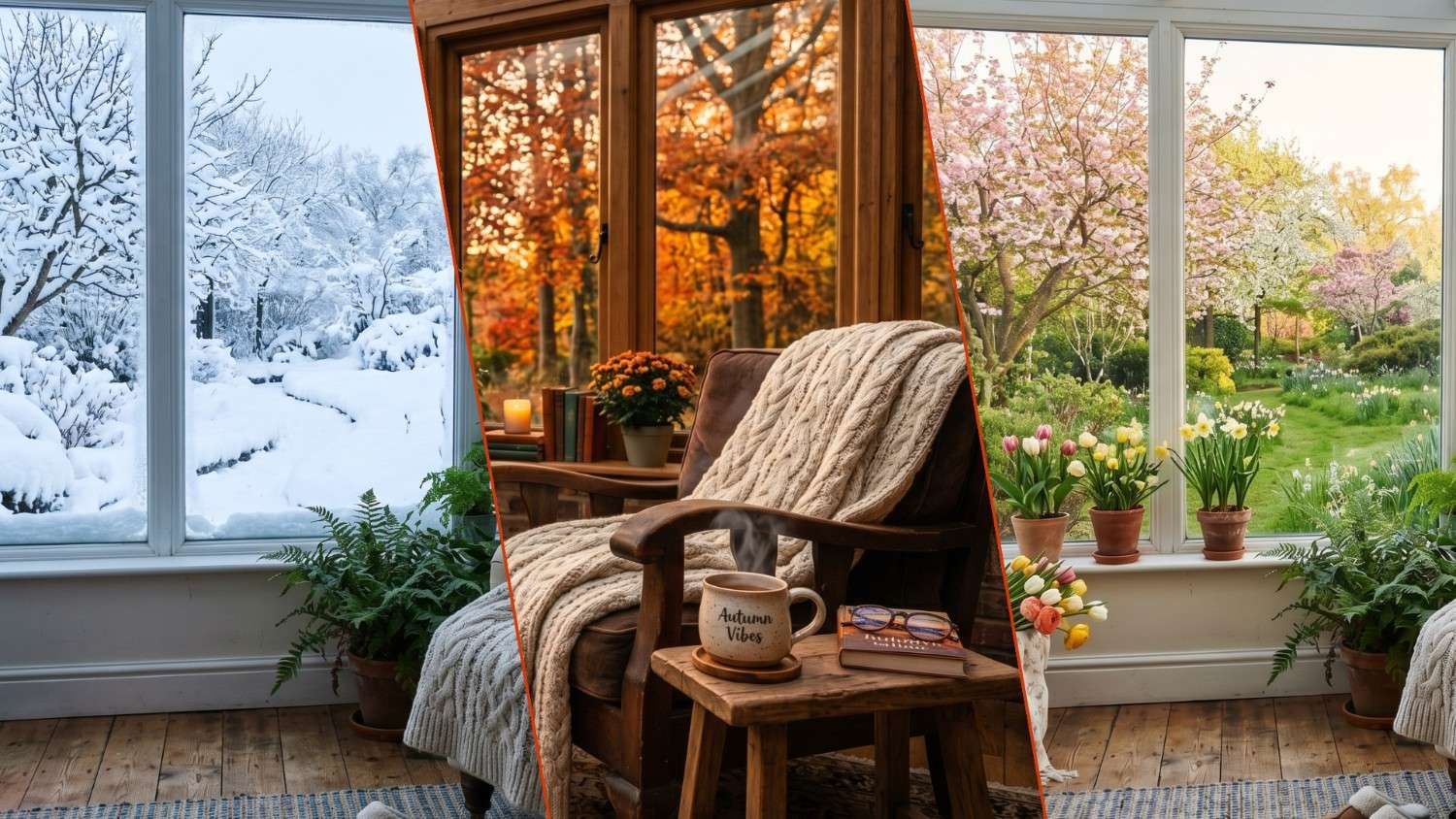
The names say it all. A three-season sunroom is designed for use in spring, summer, and fall. It protects you from rain, wind, and insects and stays comfortable in mild weather, but it isn’t built to stay warm in deep winter or cool through a heat wave. It’s an indoor-outdoor space that closes down in the harshest months.
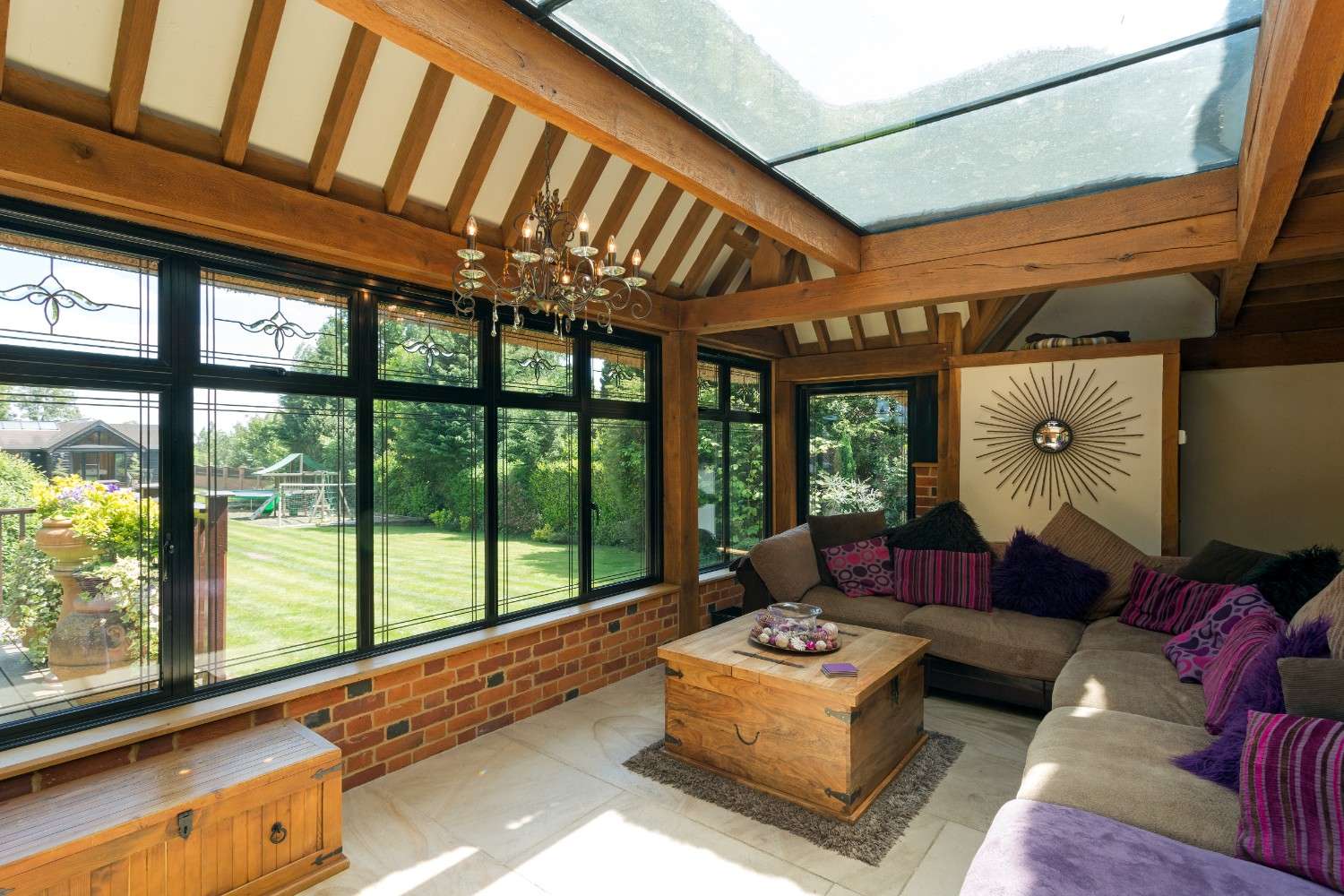
A four-season sunroom is built and insulated to be used comfortably all year, in any weather. It’s a fully conditioned room—heated, cooled, and insulated like the rest of your house—that happens to be wrapped in glass. The difference between the two comes down to the construction choices that make year-round comfort possible.
Construction and Materials
The biggest differences are the ones you can’t see at a glance. They’re in the framing, glazing, and insulation.
Glazing. A three-season room often uses single-pane or basic double-pane glass. A four-season room uses insulated double- or triple-pane glass with Low-E coatings that reflect heat—keeping warmth in during winter and out during summer. This is one of the single most important upgrades for year-round performance.
Framing. Three-season rooms use lighter-gauge framing. Four-season rooms typically use thermally broken aluminum framing—with an insulating barrier between the interior and exterior faces—to stop the heat loss and condensation that uninsulated metal frames produce.
Insulation. A four-season room has insulated walls, roof, and floor assemblies; a three-season room generally does not. This insulation is what allows the heating and cooling system to keep up.
Foundation. A four-season room usually requires a code-compliant, frost-depth foundation because it’s treated as permanent living space. A three-season room can sometimes sit on a lighter foundation or existing slab.
Heating and Cooling
This is the most practical day-to-day difference.
A three-season sunroom typically has no dedicated HVAC. A ceiling fan or a portable heater might extend its comfortable window slightly, but on the coldest and hottest days the room is simply too uncomfortable to use.
A four-season sunroom has dedicated climate control—most often a ductless mini-split that provides both heating and cooling and runs independently from the home’s main system. Combined with the insulated construction, this is what makes the room genuinely usable in every season. (Tying a sunroom into the home’s central HVAC is often discouraged or against code, which is why a dedicated system is the norm.)
Cost Difference
The added materials and systems make a four-season sunroom considerably more expensive. As a rough guide, three-season sunrooms commonly run around $80 to $230 per square foot, while four-season rooms run about $200 to $400 per square foot—the premium reflecting the better glass, thermally broken framing, insulation, foundation, and HVAC.
It’s worth being clear-eyed about this trade-off rather than buying the cheaper option and regretting it—or overbuilding for a space you’ll only use seasonally. For a full cost breakdown by type and size, see our guide to solarium cost per square foot.
Home Value and Appraisal
Here’s a difference many homeowners don’t realize until appraisal time. Because a four-season sunroom is insulated, conditioned, and built to code as permanent living space, appraisers can count it toward your home’s heated square footage—adding measurable resale value.
A three-season room generally is not counted as conditioned living area, so it adds appeal and enjoyment but contributes less to appraised square footage. If return on investment is part of your decision, this distinction matters.
Quick Comparison
| Feature | Three-Season Sunroom | Four-Season Sunroom |
| Use | Spring, summer, fall | All year, any weather |
| Glazing | Single or basic double-pane | Insulated double/triple-pane Low-E |
| Framing | Lighter-gauge | Thermally broken aluminum |
| Insulation | Minimal or none | Walls, roof, and floor insulated |
| HVAC | None (fan/portable only) | Dedicated heating and cooling |
| Foundation | Lighter / existing slab possible | Frost-depth, code-compliant |
| Typical cost/sq ft | $80–$230 | $200–$400 |
| Counts as living space | Usually no | Yes, when built to code |
Which One Is Right for You?
The right choice comes down to how you’ll use the room and your climate. If you want an affordable indoor-outdoor space for mild months—morning coffee in spring, dinners in fall—and you’re comfortable closing it down in winter, a three-season sunroom delivers a lot of enjoyment for the money. If you want a room you’ll use every day of the year, that stays comfortable in extreme weather and adds to your home’s value, a four-season sunroom is the better investment despite the higher cost.
One more consideration: in colder climates, the gap between the two is wider, because a three-season room’s unusable window is longer. The harsher your winters, the more a four-season build pays off.
If you’re weighing the two for your home and want help deciding which fits your climate, budget, and goals, the team at Sunshine Rooms can walk you through the options and design the right room for the way you’ll actually use it.
Related Posts


We Like to Hear From You!
We service and support the products we manufacture and install. If you need assistance with
our products or those of another sunroom manufacturer, contact us!