
A sunroom’s biggest asset—all that glass—is also its biggest design challenge. Too much unfiltered sunlight creates glare, fades furniture, and turns the room into an oven during summer afternoons. But the wrong window treatment blocks the natural light that makes the space special in the first place.
The best window treatment for your sunroom depends on what problem you’re solving: heat control, UV protection, privacy, glare reduction, or simply aesthetics. Here’s how each option performs so you can choose with confidence.
Cellular (Honeycomb) Shades — Best for Insulation
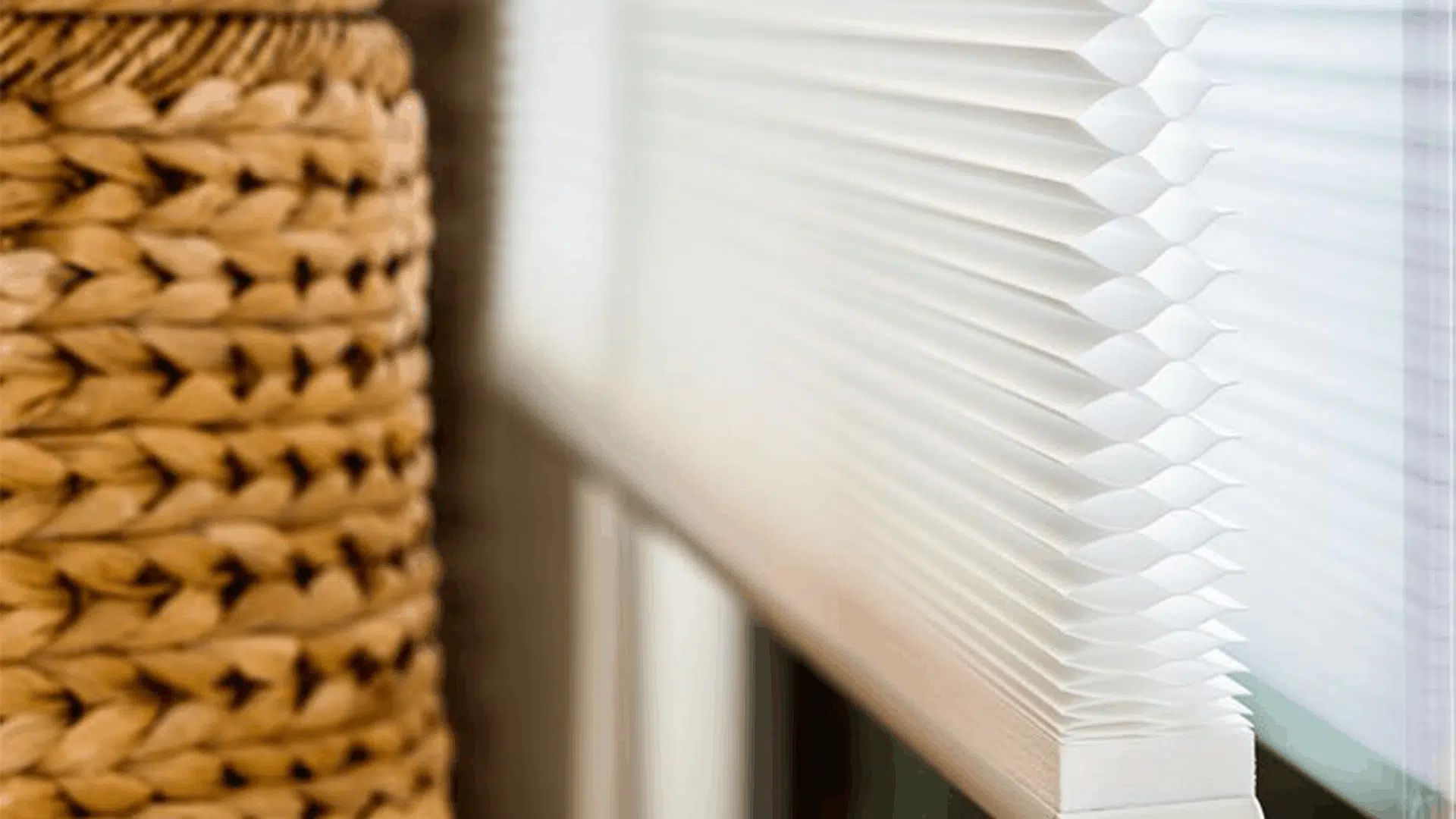
If temperature control is your primary concern, cellular shades are the strongest performer. Their honeycomb structure traps air in distinct pockets, creating an insulating barrier between the glass and the room.
What makes them effective? Single-cell shades provide moderate insulation. Double-cell (two layers of honeycomb) significantly improves thermal performance, reducing heat gain in summer and heat loss in winter. Some manufacturers claim energy savings of up to 25% on heating and cooling costs for rooms with extensive glazing—though the actual impact depends on your glass type, climate, and how consistently you use them.
Light control options. Cellular shades come in light-filtering (softens light while maintaining brightness), room-darkening (blocks most light), and blackout (blocks virtually all light) fabrics. For sunrooms, light-filtering is usually the best choice—it cuts glare and UV exposure without eliminating the natural light you built the room to enjoy.
Considerations. Cellular shades trap moisture in humid environments, which can lead to mold growth inside the honeycomb cells over time. In sunrooms with plants, hot tubs, or poor ventilation, choose a moisture-resistant fabric or consider a different option. They also don’t hold up well to direct contact with wet glass—keep them raised slightly when heavy condensation is present.
Roller Shades — Best for Simplicity and UV Control
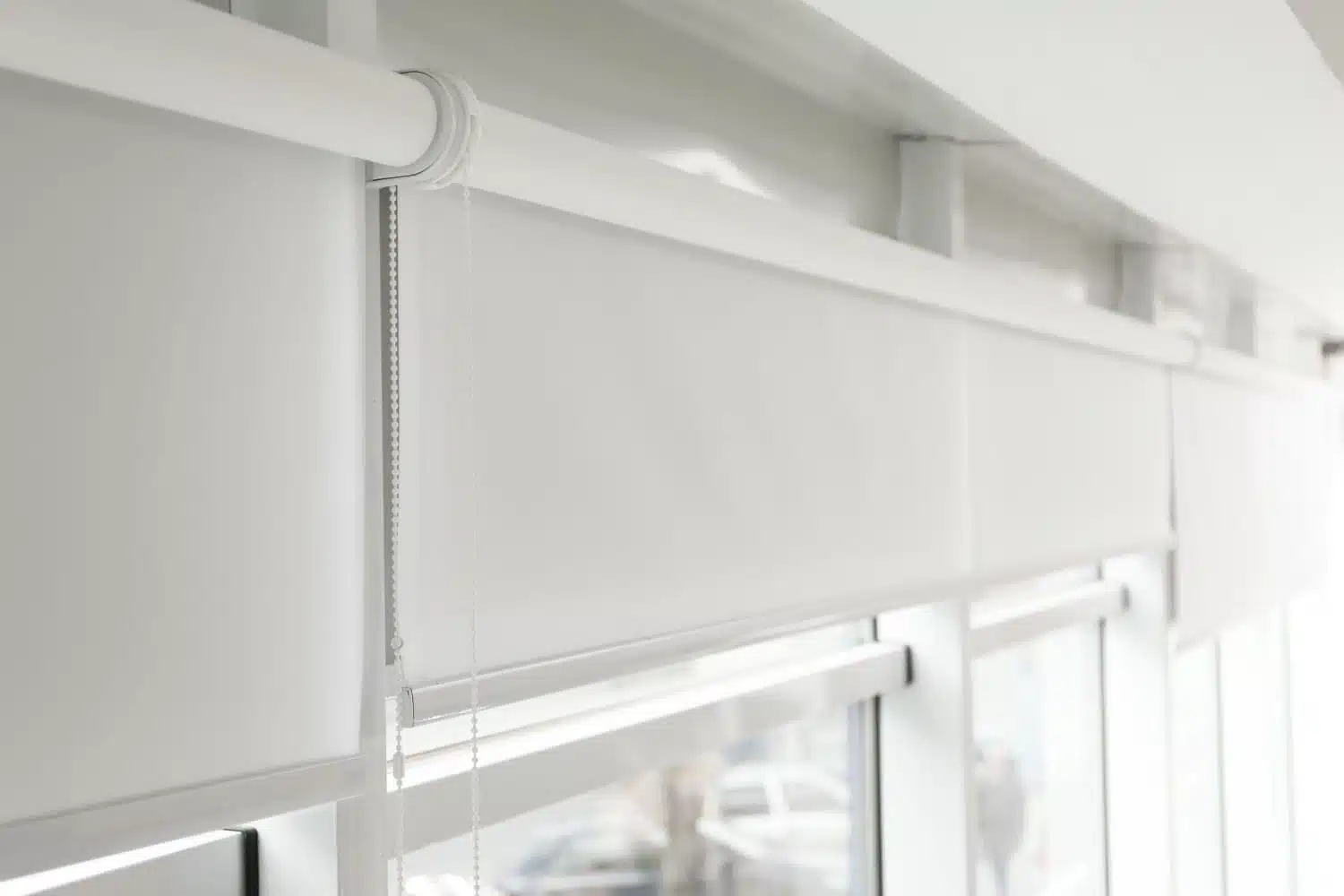
Roller shades offer clean, minimalist light control with a wide range of opacity and UV-blocking options. They’re one of the most popular choices for sunrooms because of their versatility and low profile.
Solar roller shades are specifically designed for glass-heavy spaces. They use an open-weave fabric that blocks a defined percentage of solar radiation—typically rated from 1% (nearly opaque) to 14% (light filtering) openness factor. A 3-5% openness factor is the sweet spot for most sunrooms: it reduces glare and blocks 95-97% of UV rays while still allowing you to see through the fabric to your outdoor views.
Motorized options. In a sunroom with multiple large panels, manually adjusting each shade is tedious. Motorized roller shades—controlled by remote, wall switch, or smartphone app—make daily adjustments practical. Some systems integrate with smart home platforms and adjust automatically based on sun position or interior temperature. Motorized systems add $100-$300 per shade over manual versions but dramatically increase how often you’ll actually use them.
Considerations. Roller shades don’t insulate as well as cellular shades. They reduce radiant heat from direct sunlight but provide minimal barrier against conductive heat transfer through the glass. If temperature control and UV protection are both priorities, pairing solar roller shades with high-performance Low-E glass gives you the best of both approaches.
Roman Shades — Best for Warmth and Texture
If your sunroom functions as a living space where aesthetics matter as much as performance, Roman shades add a layer of softness and visual warmth that hard treatments can’t match.
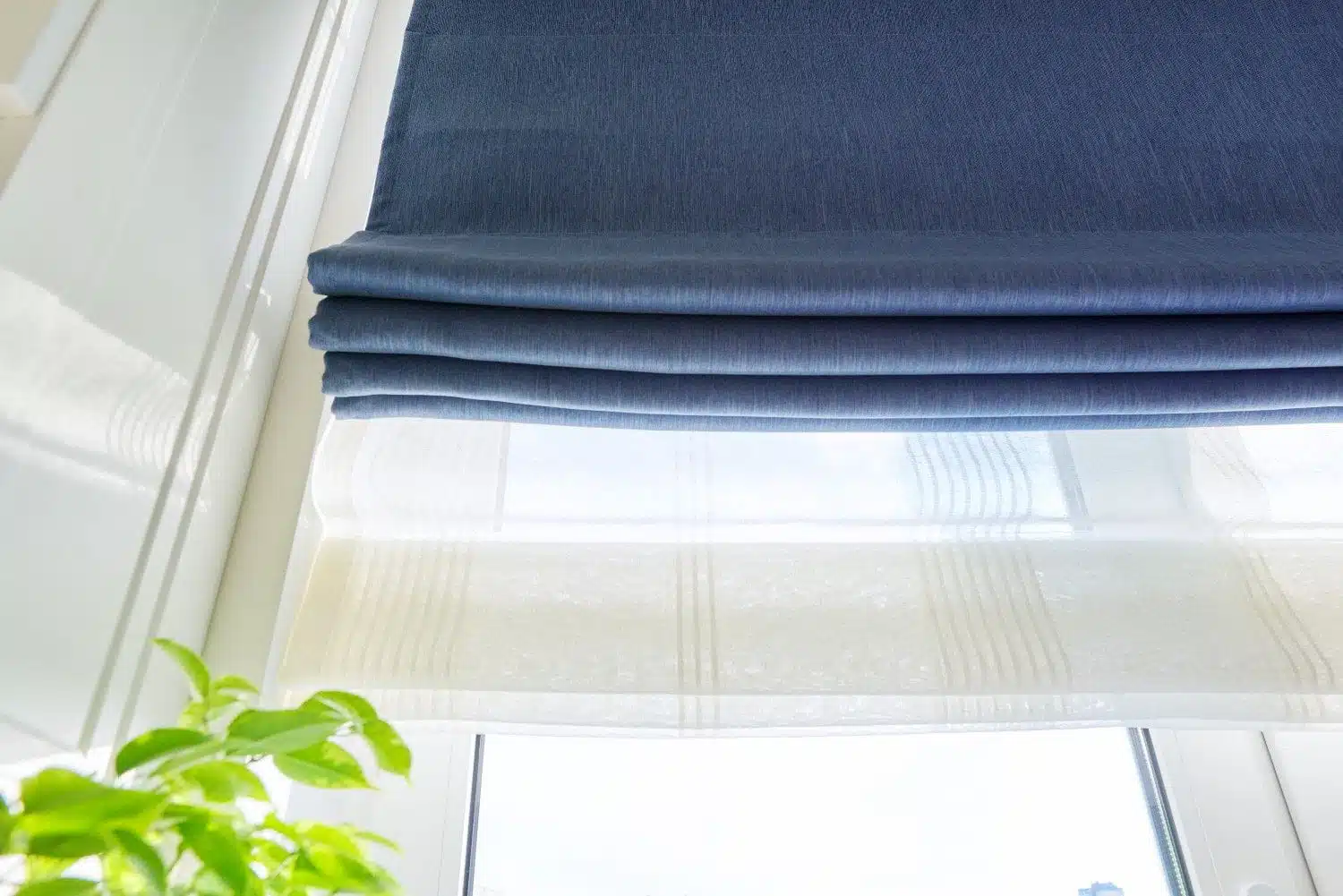
How they work. Roman shades fold into neat horizontal pleats when raised and lie flat against the glass when lowered. The fabric weight and lining determine their light-blocking and insulating properties. A lined Roman shade provides moderate UV protection and some thermal benefit, while an unlined version is primarily decorative.
Fabric selection matters. In a sunroom environment, fabric is exposed to sustained UV radiation that causes fading and fiber degradation far faster than in a standard room. Choose fade-resistant fabrics—solution-dyed acrylics, polyester blends, or Sunbrella-type outdoor performance fabrics—rather than natural fibers like cotton or linen, which deteriorate quickly under constant sun exposure. A quality fade-resistant fabric maintains its color and integrity for 5-7 years in a sunroom versus 1-3 years for standard interior fabrics.
Considerations. Roman shades are more expensive per window than roller or cellular shades, and the fabric requires periodic cleaning. They work best on standard vertical windows. For angled or overhead glass, other options are more practical.
Exterior Shading — Best for Heat Reduction
The most effective way to control solar heat gain is to block sunlight before it reaches the glass. Exterior treatments outperform interior treatments for heat reduction because they prevent solar energy from entering the room in the first place rather than trying to manage it after it’s already inside.
Retractable awnings shade the glass from above, reducing direct solar gain by 55-65% on south-facing windows and up to 75% on west-facing windows. They retract when you want full sun or during high winds. Manual awnings cost $1,000-$3,000 installed; motorized versions run $2,000-$5,000.
Exterior roller screens mount outside the glass and roll down to block sun while maintaining airflow and outward visibility. They’re effective at reducing both heat and glare and retract completely when not needed.
Solar window film is a permanent application rather than a treatment you raise and lower. Applied directly to the glass interior surface, quality solar film blocks 60-85% of solar heat and up to 99% of UV radiation while maintaining 40-70% visible light transmission. Professional installation runs $8-$15 per square foot. The trade-off: film is always on—you can’t remove it when you want full, unfiltered sunlight.
Important note: Check with your glass manufacturer before applying film to Low-E or insulated glass. Some films void the glass warranty or cause thermal stress that can crack sealed units.
Plantation Shutters — Best for Durability and Resale Value
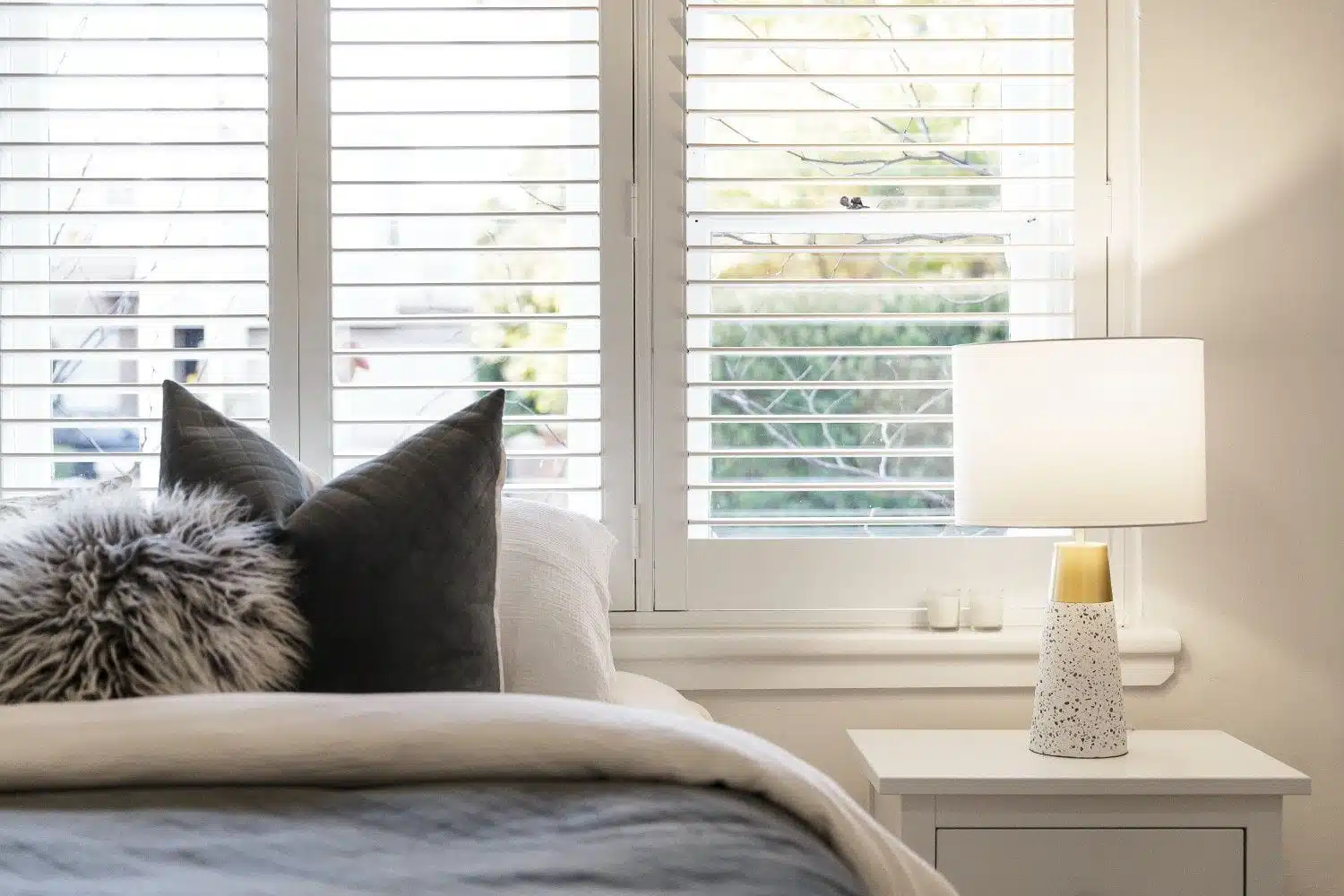
Interior plantation shutters are the most durable window treatment option and consistently rank as a value-add at resale. Their rigid louvers adjust to control light angle without fully blocking the view, giving you fine-grained control over where sunlight falls in the room.
Material choice. Real wood shutters are attractive but can warp and crack in the high-heat, variable-humidity environment of a sunroom. Composite (faux wood) or vinyl shutters resist moisture and UV damage far better and are the recommended choice for sunrooms. They look nearly identical to wood from a normal viewing distance and cost 20-40% less.
Light control. Adjustable louvers let you redirect sunlight toward the ceiling (brightening the room without direct glare) or close fully for privacy and maximum light blocking. This adjustability makes shutters more versatile than fixed-opacity shades.
Considerations. Shutters are the most expensive interior treatment option, typically $200-$500 per window installed. They’re also permanent—mounted to the window frame—which makes them impractical for renters or homeowners who change decor frequently. On very large sunroom panels, custom-sized shutters become significantly more expensive.
What to Avoid in a Sunroom
Some treatments that work well in standard rooms fail quickly in a sunroom’s demanding environment.
Standard curtains and drapes made from natural fibers (cotton, linen, silk) fade and weaken rapidly under sustained UV exposure. If you want the look of curtains, choose outdoor-rated performance fabrics specifically engineered for UV resistance.
Vertical blinds are fragile in sunroom applications. The vanes warp from heat exposure and break easily. They also provide poor insulation and limited UV protection.
Dark-colored treatments absorb solar radiation and re-emit it as heat into the room, working against your cooling efforts. Lighter colors and reflective-backed fabrics redirect solar energy rather than absorbing it.
Matching the Treatment to Your Priorities
| Your Priority | Best Option |
| Maximum insulation | Double-cell cellular shades |
| UV protection with view preservation | Solar roller shades (3-5% openness) |
| Heat reduction (most effective) | Exterior awnings or solar film |
| Aesthetics and living-room feel | Roman shades in performance fabric |
| Durability and resale value | Composite plantation shutters |
| Budget-friendly coverage | Roller shades (manual) |
| Smart home integration | Motorized roller or cellular shades |
No single treatment does everything perfectly. Many sunroom owners combine options—solar roller shades on south- and west-facing glass for heat control, with lighter cellular shades on east- and north-facing windows for insulation—to address different exposures with the right tool for each.
Choosing What Works for Your Space
The best window treatment for your sunroom is the one that solves your specific problem—whether that’s summer heat, winter drafts, UV damage to furniture, or simply wanting more control over how much light fills the room.
Before purchasing, consider your glass type (Low-E glass already provides some UV and heat control, which may reduce what you need from treatments), your primary sun exposure direction, and whether you prefer the flexibility of adjustable treatments or the consistency of a permanent solution like film.
If you’re planning a new sunroom and want to factor window treatments into the design from the start, the team at Sunshine Rooms can help you choose glass and treatment combinations that work together for maximum comfort and efficiency.
Related Posts

We Like to Hear From You!
We service and support the products we manufacture and install. If you need assistance with
our products or those of another sunroom manufacturer, contact us!