
Where your solarium faces shapes how it feels every day—how much sun it gets, when that sun arrives, how warm it runs, and what you can comfortably do in it. Get the orientation right and the room works with the sun. Get it wrong and you may be fighting glare and overheating, or wishing for more light than you ever get.
So what’s the best orientation for a solarium? The honest answer is that it depends on your climate and how you plan to use the room. There’s no single perfect direction—but there is a best direction for your situation. Here’s how each orientation performs so you can choose with confidence. (These guidelines assume the Northern Hemisphere, where the sun tracks across the southern sky.)
Why Orientation Matters So Much
A solarium is mostly glass, which makes it far more sensitive to sun exposure than an ordinary room. The direction it faces determines how much solar energy it collects, at what time of day, and in which seasons. That affects three things you’ll notice constantly: natural light, temperature, and glare.
Orientation also interacts with your climate. The “best” direction in a cold northern climate—where you want to capture every bit of winter warmth—can be the worst in a hot southern one, where the goal is avoiding heat. So think about orientation and climate together, not separately.
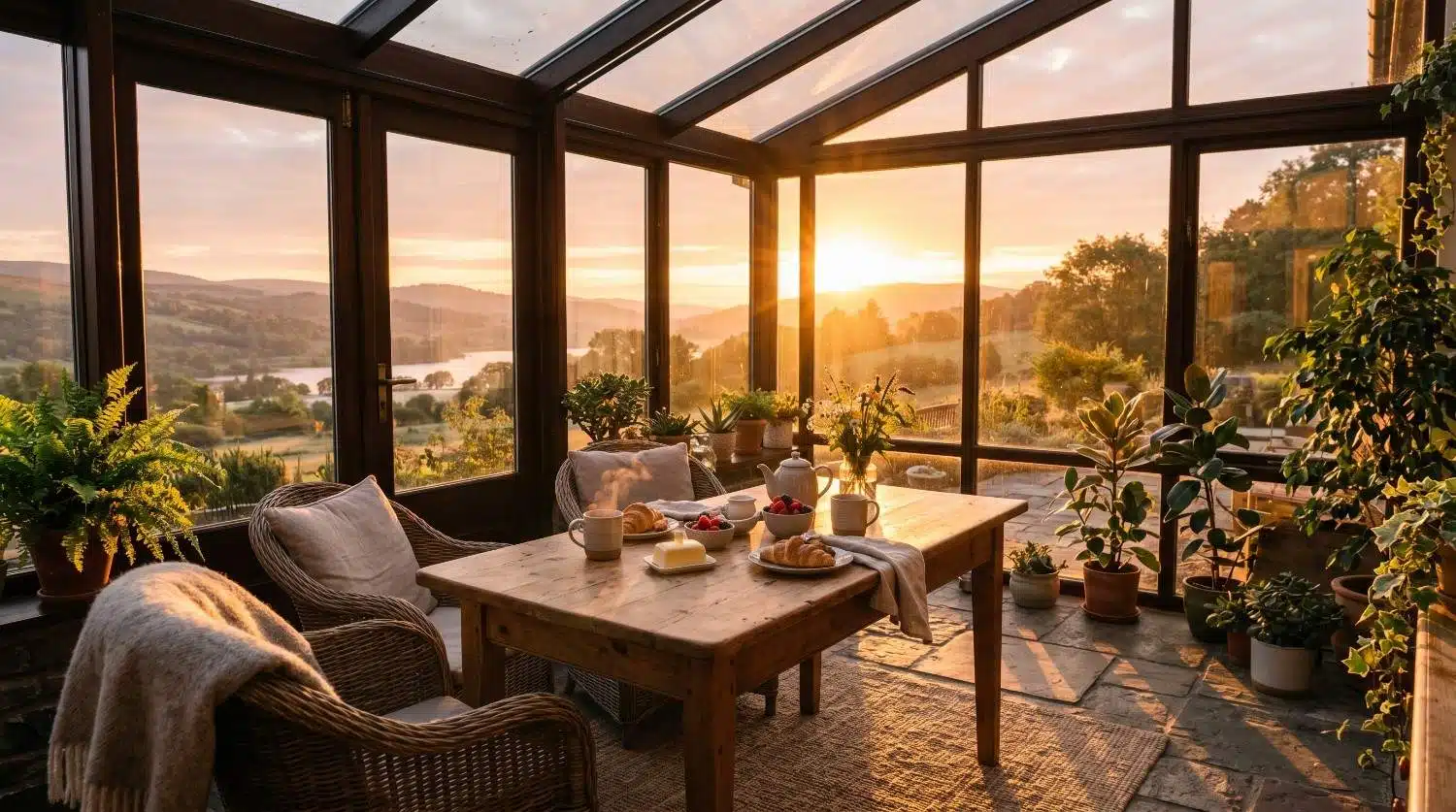
South-Facing — Maximum Light and Warmth
A south-facing solarium receives the most sunlight throughout the day and across all seasons. It’s the warmest orientation and the classic choice for cold climates.
Best for: year-round use in northern regions, passive solar warmth in winter, and growing plants that need lots of light. The low winter sun pours in and helps heat the room naturally, reducing heating costs in the cold months.
Watch out for: summer overheating. The same exposure that’s wonderful in January can turn the room into a hot box in July. A south-facing solarium needs a plan for managing heat—Low-E glazing, good ventilation, and shading like blinds or custom sunshades—to stay comfortable in summer. With that in place, south-facing is the most versatile orientation for most of the country.
North-Facing — Soft, Even Light and Cooler Temperatures
A north-facing solarium gets the least direct sunlight. Instead of strong, shifting sunbeams, it receives soft, indirect, remarkably even light all day.
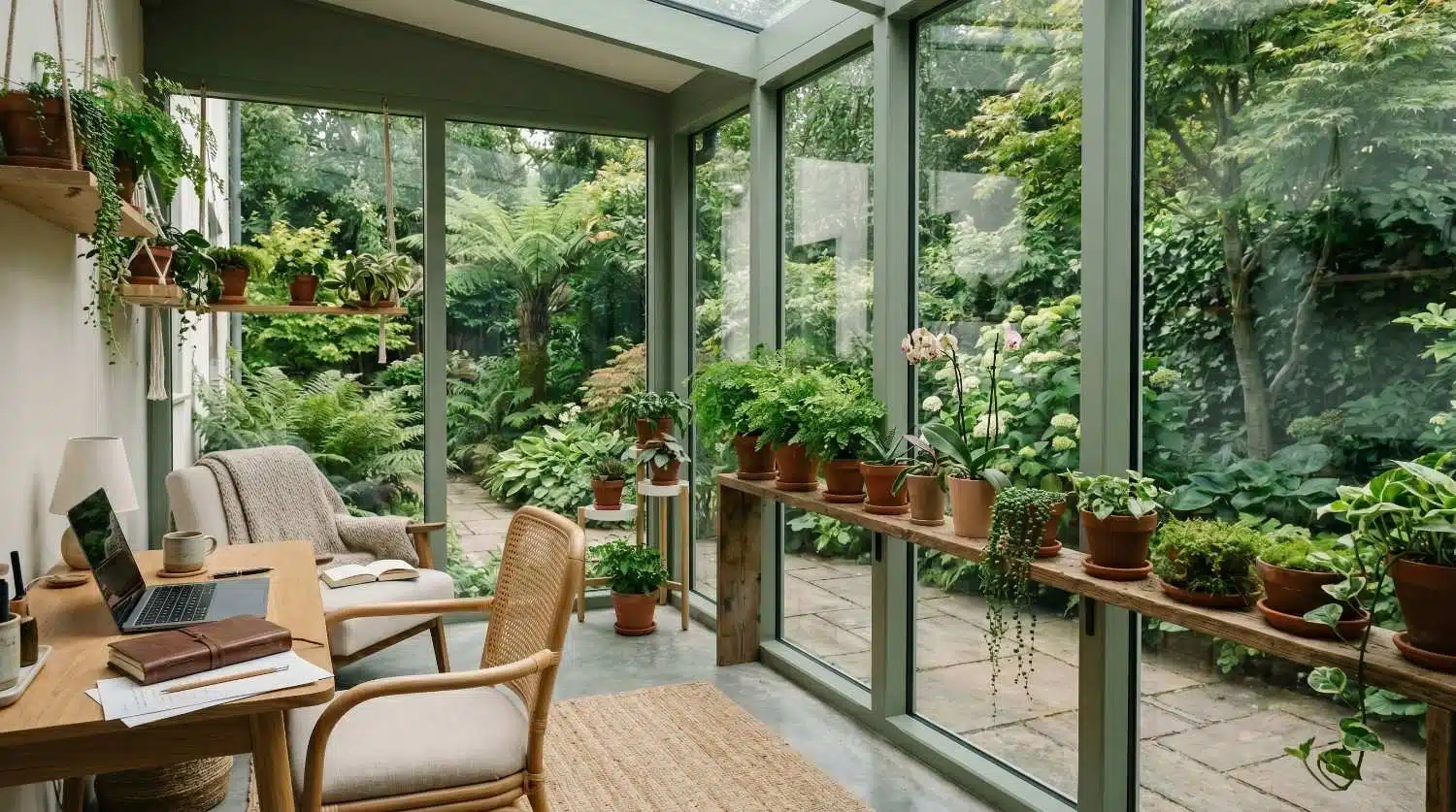
Best for: hot climates where avoiding heat is the priority, and uses that benefit from steady, glare-free light—an art studio, a reading room, or a home office where screen glare is a nuisance. It stays the coolest of the four orientations.
Watch out for: in cold climates, a north-facing room is the hardest to keep warm and gets little of that free winter solar gain, so it leans more heavily on its heating system. It’s also the dimmest in terms of direct sun, which some people find less cheerful.
East-Facing — Gentle Morning Sun
An east-facing solarium catches the morning sun and sits in shade through the afternoon. It warms up gently early in the day and stays cooler later.
Best for: morning use—a breakfast room, a spot for coffee and sunrise, or anyone who wants bright mornings without afternoon heat. Because it avoids the harsh late-day sun, it’s a comfortable choice in warm climates and an easy room to keep cool.
Watch out for: it won’t deliver much warmth or light in the afternoon and evening, so it’s less ideal if that’s when you’ll use the room most. In cold climates it provides less all-day passive heating than a south-facing room.
West-Facing — Afternoon and Evening Sun
A west-facing solarium stays cooler in the morning and heats up through the afternoon, holding warmth and light into the evening. It’s the orientation for sunset lovers.
Best for: evening use—a place to unwind after work, enjoy long summer evenings, and watch the sunset. It captures beautiful late-day light.
Watch out for: west-facing rooms get the most intense afternoon heat, which makes summer overheating the biggest challenge of any orientation. Low, direct evening sun also creates strong glare. A west-facing solarium especially needs high-performance glazing, exterior or interior shading, and good ventilation to stay comfortable on hot afternoons.
Quick Comparison
| Orientation | Sun Exposure | Best For | Main Challenge |
| South | Most, all day and all seasons | Cold climates, year-round use, plants | Summer overheating |
| North | Least direct; soft even light | Hot climates, studios, glare-free work | Cold-climate heat loss, dimmer |
| East | Morning sun, shaded afternoon | Breakfast rooms, morning use, warm climates | Little afternoon warmth/light |
| West | Afternoon and evening sun | Evening use, sunsets | Intense afternoon heat and glare |
How to Choose for Your Climate and Use
Two questions settle most decisions.
What’s your climate? In a cold climate, south-facing maximizes free winter warmth and usually wins. In a hot climate, north- or east-facing keeps the room comfortable with far less effort, while south- and west-facing demand aggressive heat management.
When and how will you use the room? Match the orientation to your daily rhythm. Love morning coffee in the sun? East. Want to relax and watch sunsets? West. Growing plants or want a bright, warm room all day? South. Need cool, steady light for work or art? North.
When climate and use point in different directions, let your climate guide the structural decision and your use guide the details—because shading, glazing, and ventilation can adapt a room to how you use it more easily than they can fight a punishing climate.
When You Can’t Pick the Perfect Orientation
Here’s the practical reality: most homeowners don’t get a free choice. The room attaches to a specific wall of an existing house, and that dictates which way it faces. If your only option isn’t the textbook ideal, don’t worry—orientation sets the starting point, but it isn’t destiny.
The right glazing (Low-E, and solar-control glass for hot exposures), proper ventilation, and good shading can dramatically offset a less-than-ideal direction. A west-facing room with solar-control glass and motorized shades can be perfectly comfortable; a north-facing room with the right heating performs well year-round. (Our guides on keeping a sunroom cool in summer and on custom sunshades cover these tools in detail.)
If you’d like help planning a solarium for your home’s available orientation, climate, and the way you want to use it, the team at Sunshine Rooms can design a room that makes the most of whichever direction it faces.
Related Posts



We Like to Hear From You!
We service and support the products we manufacture and install. If you need assistance with
our products or those of another sunroom manufacturer, contact us!