
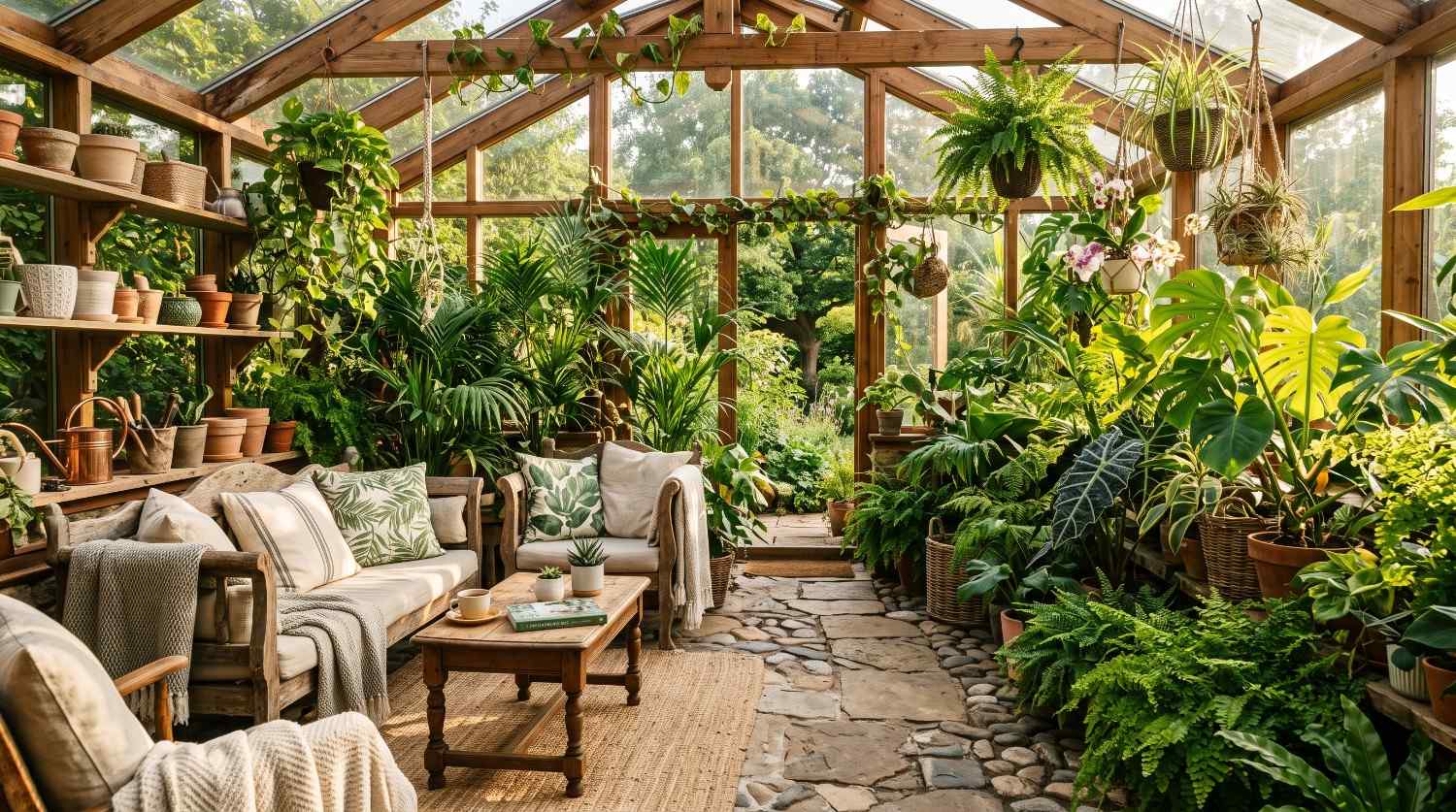
A sunroom in February looks like the perfect kitchen garden. Glass on three sides, sun pouring in, herbs and greens thriving while snow sits on the lawn outside. It’s an appealing picture, and it isn’t fantasy. But the room in that picture is working harder than most people realize.
So can you grow vegetables year-round in a greenhouse sunroom? Yes, as long as the room can hold temperature through winter nights and shed heat on summer afternoons. Those two demands pull in opposite directions, and how well your room handles both is what separates a January harvest from a tray of stalled seedlings. Here’s what year-round growing actually asks of the space, what does well in each season, and the design choices that make the difference.
What Counts as a Greenhouse Sunroom
The term covers a middle ground between two different structures, and knowing which one you have sets realistic expectations.
A dedicated greenhouse is built for plants and nothing else. Every choice, from glazing to floor to humidity, optimizes for growing. Nobody expects it to be comfortable to sit in.
A greenhouse sunroom is a living space first, glazed and conditioned for people, that also happens to be an excellent growing environment. It’s attached to the house, shares its heating and cooling, and has to stay pleasant to occupy.
That second definition is the one most homeowners mean, and it’s the reason year-round growing takes planning. The room is serving two purposes, and the plants don’t get to win every argument.
Winter Is the Real Test
Cold months are where year-round growing succeeds or quietly fails. Two things determine the outcome.
Temperature. Most vegetables slow dramatically below 50°F and stop entirely near freezing. Cool-season greens tolerate the low end well, but anything fruiting wants 60°F to 75°F. Glass loses heat quickly overnight, so a room with single-pane or poorly sealed glazing can swing 25 degrees between afternoon and dawn. Insulated, thermally broken construction and a reliable heat source are what keep that swing survivable.
Light. Even a bright, south-facing room gets short winter days. Below roughly 10 hours of daylight, growth slows regardless of temperature, and fruiting crops mostly stop producing. Leafy greens and herbs handle this well. Tomatoes and peppers usually need supplemental grow lights to keep going through December and January.
Summer Is the Other Problem
Winter gets all the attention, but heat is what actually kills more indoor crops. A glazed room in July can climb past 100°F by early afternoon, and plants suffer well before that. Tomatoes drop their blossoms above about 90°F, lettuce bolts and turns bitter, and tender seedlings scorch under direct midday glass.
Managing this takes three things working together: operable windows, roof vents, or a fan for real air exchange; shading during peak hours, whether that’s interior blinds, exterior shades, or planting arrangement; and solar-control glazing that cuts heat gain without gutting the light. Our guide to keeping a sunroom cool in summer covers the ventilation and shading options in more depth, and our piece on custom sunshades goes through the exterior route.
What Grows Well, Season by Season
| Season | What to Manage | Crops That Perform |
| Winter | Night temperature, short days | Spinach, kale, chard, lettuce, arugula, herbs, radishes, scallions |
| Spring | Wide temperature swings | Seedlings for the outdoor garden, peas, early tomatoes, salad greens |
| Summer | Heat, glare, ventilation | Peppers, eggplant, basil, cucumbers, cherry tomatoes |
| Fall | Declining light levels | Lettuce, bok choy, arugula, carrots in deep pots, overwintering herbs |
The honest summary: leafy greens and herbs are the genuine year-round performers, and they’re forgiving enough that most sunrooms can produce them month after month. Fruiting crops like tomatoes, peppers, and cucumbers are realistic for roughly three seasons in most climates, and become a year-round proposition only with supplemental lighting and steady winter heat.
Design Choices That Make Growing Easier
If a growing room is the goal from the start, a few decisions pay off for years.
Glazing. Low-E insulated glass is the baseline for holding temperature. Worth knowing: some aggressive solar-control coatings reduce the light spectrum plants use, so tell your designer that growing is a priority and let them balance the two.
Orientation. South-facing collects the most light across all seasons and is the strongest choice for growing. East-facing works well for greens that prefer gentler exposure. Our guide to the best orientation for a solarium walks through the tradeoffs by climate and use.
Floors and drainage. Sealed tile, stone, or concrete handles spills, humidity, and dropped soil far better than carpet or unsealed wood. A floor drain or a waterproof membrane under the finish is worth the modest cost if you plan to water regularly.
Humidity Is the Risk Nobody Plans For
Watering plants daily in an enclosed glass room raises humidity substantially, and that moisture has to go somewhere. In winter it condenses on the coldest surfaces, which in a sunroom means the glass and the frames. Left unmanaged, it leads to persistent condensation, mold on sills and sashes, and damage to wood trim and finishes.
The fixes are straightforward if you plan for them: adequate ventilation year-round rather than just in summer, an exhaust fan or dehumidifier for heavy growing periods, moisture-tolerant materials at the sills, and a cheap hygrometer so you know where you stand. Aim to keep relative humidity below about 60% in winter. Rooms designed with growing in mind handle this easily. Rooms that acquire a garden later are the ones that develop problems.
So, Can You Grow Vegetables Year-Round in a Greenhouse Sunroom?
Yes. A well-built, well-oriented sunroom with insulated glazing, a dependable heat source, real ventilation, and a humidity plan will produce greens and herbs every month of the year, and fruit vegetables for most of it. What it takes is treating the room as a growing environment from the design stage rather than hoping a comfortable sitting room will double as one.
If you’re planning a sunroom you’d like to garden year-round, the team at Sunshine Rooms can help you sort out the glazing, orientation, ventilation, and finishes that make the room work for both you and your plants.
Related Posts

We Like to Hear From You!
We service and support the products we manufacture and install. If you need assistance with
our products or those of another sunroom manufacturer, contact us!