
Choosing the right glazing material for your pool enclosure is one of the most important decisions you’ll make during the planning process. Glass and polycarbonate are the two leading options, and each brings a distinct set of strengths and trade-offs to the table.
Pick the wrong material for your climate, budget, or priorities, and you’ll be dealing with the consequences for years. Pick the right one, and your pool enclosure will deliver comfort, protection, and visual appeal for decades. Here’s an honest comparison to help you decide.
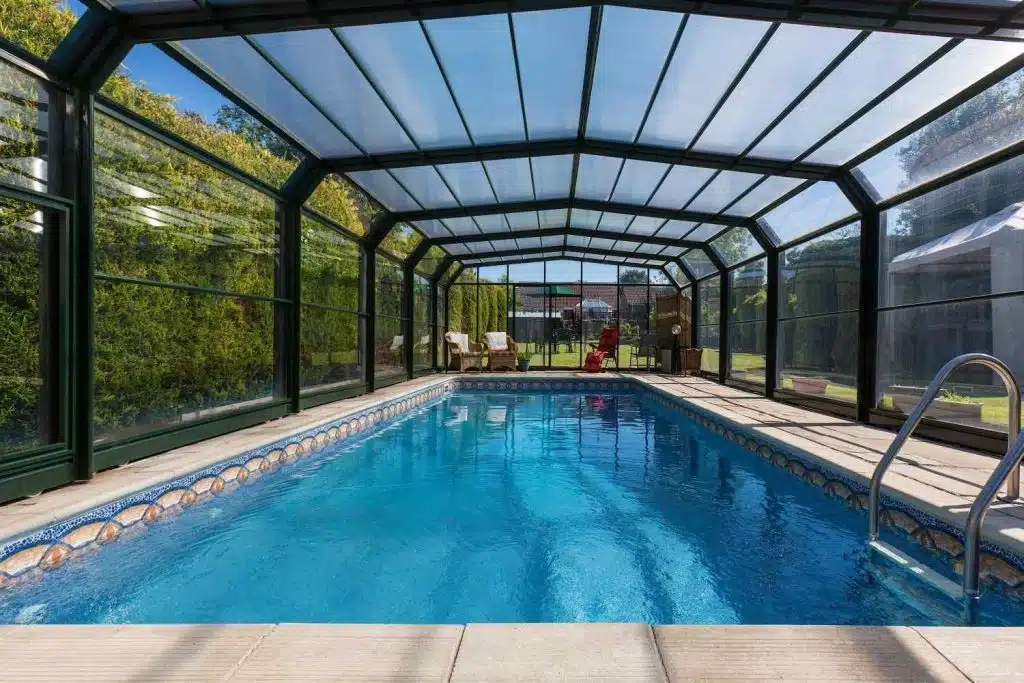
Durability and Impact Resistance
This is where the two materials differ most dramatically.
Polycarbonate is virtually unbreakable under normal conditions. It offers 200-250 times the impact resistance of standard glass, making it the clear winner in storm-prone, hail-active, or high-traffic environments. It won’t shatter on impact—it flexes, absorbs the force, and holds its shape. For pool enclosures near play areas or in regions with severe weather, this resilience is a significant safety advantage.
Glass—even tempered or laminated—can break under sufficient force. However, tempered glass shatters into small, rounded pieces rather than sharp shards, and laminated glass holds together when cracked, reducing injury risk. What glass lacks in impact resistance, it makes up for in longevity. Tempered glass typically lasts 20-40 years, and laminated glass can last 25-50 years under favorable conditions—though pool enclosure environments with high humidity, UV exposure, and thermal cycling can accelerate wear on seals and interlayers. Polycarbonate—even with UV coatings—begins yellowing and losing clarity after 10-15 years.
The trade-off: Polycarbonate handles sudden impact better. Glass handles time better.
Optical Clarity and Light Transmission
If crystal-clear views matter to you, this comparison is straightforward.
Glass transmits 88-90% of visible light through standard architectural panels and provides undistorted, sharp views in every direction. It maintains this optical quality indefinitely—a glass panel installed today will look the same in 30 years. For pool enclosures where you want to enjoy garden views, watch the sky, or simply appreciate a premium, clean aesthetic, glass is the superior choice.
Polycarbonate transmits up to 85-88% of light in clear, solid single-wall panels, which is close to glass but not quite equivalent. Multi-wall polycarbonate—the type most commonly used for its insulating properties—transmits noticeably less (typically 60-70% for standard multi-wall panels) and introduces a visible diffusion effect that softens views and reduces clarity. Over time, UV exposure causes yellowing that further reduces light transmission and visual quality.
The trade-off: Glass wins on clarity and long-term visual performance. Polycarbonate starts close but degrades over its lifespan.
Thermal Insulation and Energy Efficiency
For pool owners who heat their water or use their enclosure year-round, insulation performance directly affects operating costs.
Multi-wall polycarbonate insulation varies significantly by configuration. Standard twin-wall panels deliver an R-value of approximately 1.4-1.5, triple-wall reaches about R-2.0, and premium five-wall panels achieve R-3.0 or higher. The air pockets trapped between layers resist heat transfer, keeping warm air inside during cooler months and reducing heating costs for both the pool water and the enclosed space.
Single-pane glass has an R-value of only 0.9-1.0—significantly less effective than polycarbonate. However, modern double-pane insulated glass units (IGUs) close the gap substantially, delivering R-values of 2.0-3.0. High-performance IGUs with Low-E coatings and argon gas fills can match or exceed multi-wall polycarbonate insulation.
The trade-off: Multi-wall polycarbonate insulates better than single-pane glass, but quality double-pane IGUs match or exceed standard twin-wall and triple-wall polycarbonate, with the added benefit of optical clarity. High-performance IGUs with gas fills can reach R-4 to R-5.
UV Protection
Protecting swimmers, pool equipment, and interior finishes from UV damage is a key function of any pool enclosure.
Polycarbonate with UV-protective coatings blocks up to 99% of harmful ultraviolet radiation. This protection is built into the panel during manufacturing—no additional treatment is required. However, the UV-blocking layer sits on the exterior surface and gradually degrades over time, reducing its effectiveness as the panel ages and yellows.
Standard clear glass blocks essentially all UVB radiation but transmits the majority of UVA—roughly 50-75% depending on thickness and type. Since UVA is the primary driver of skin aging and pool chemical degradation, this matters for enclosure applications. Laminated glass blocks nearly all UV (both UVA and UVB) by default. For non-laminated panels, specifying Low-E or UV-coated glass adds cost but matches polycarbonate’s UV performance and maintains that protection indefinitely since the coating is sealed between glass layers.
The trade-off: Polycarbonate offers UV protection by default but it diminishes over time. Glass requires specific coatings but delivers permanent UV protection once installed.
Maintenance Requirements
The long-term care each material demands is worth considering before you commit.
Polycarbonate requires careful handling. Clean it at least twice per year with mild soap and a soft cloth—never use abrasive pads or harsh chemicals, as scratching accelerates degradation. Inspect and re-seal panel joints annually. In humid pool environments, algae buildup on polycarbonate surfaces is common and needs regular attention. Expect to replace panels at the 10-to-15-year mark when yellowing and clarity loss become unavoidable.
Glass is more forgiving. Standard glass cleaners and common cleaning tools work fine without risk of damage. Glass doesn’t scratch as easily, doesn’t yellow, and doesn’t require panel replacement under normal conditions. Periodic seal and frame inspections are still necessary, and if breakage does occur, repair costs are higher than polycarbonate panel replacement.
The trade-off: Glass is lower-maintenance over its lifetime. Polycarbonate demands more careful cleaning and eventually requires replacement.
Cost Comparison
Budget is often the deciding factor, so let’s break down what each material actually costs.
| Factor | Polycarbonate | Glass |
| Material cost per sq ft | $15-$45 | $30-$75 |
| Installation labor rate | ~$35/hour | ~$50/hour |
| Panel lifespan | 10-15 years | 20-50 years |
| Replacement cycles (30-year span) | 2-3 replacements | None |
Polycarbonate wins on upfront cost—it’s roughly 40-50% less expensive to purchase and install. However, when you factor in replacement cycles over a 30-year period, the total cost of ownership can approach or even exceed the cost of a single glass installation. The choice comes down to whether your budget favors lower initial investment or lower lifetime cost.
Weight and Structural Considerations
Polycarbonate weighs approximately half as much as equivalent glass panels. This lighter weight reduces the structural demands on framing, foundations, and support systems. For retrofit projects—enclosing an existing pool deck or patio not originally designed for heavy glazing—polycarbonate may be the only practical option without costly structural reinforcement.
Glass is heavier and requires more robust framing and potentially reinforced foundations. This adds to both material and labor costs. However, the sturdier structure required for glass also contributes to a more solid, permanent feel and greater wind resistance.
Which Material Is Right for Your Pool Enclosure?
The best choice depends on your specific situation. Here’s a quick guide:
| Your Priority | Best Choice |
| Storm and hail protection | Polycarbonate |
| Year-round use in cold climates | Multi-wall polycarbonate |
| Premium aesthetics and crystal-clear views | Glass |
| Lowest upfront cost | Polycarbonate |
| Longest lifespan without replacement | Glass |
| Maximum UV protection (permanent) | Glass with Low-E coating |
| Retrofit on existing structure | Polycarbonate |
| High-end residential or commercial property | Glass |
Get Expert Guidance from Sunshine Rooms
Neither glass nor polycarbonate is universally better—each wins in different situations. Polycarbonate makes sense when impact resistance, insulation, or budget are your top concerns. Glass is the stronger choice when you prioritize long-term durability, optical clarity, and a premium aesthetic.
The best approach is to evaluate your climate, structural situation, and what matters most to you, then choose accordingly. If you’d like help weighing the options for your specific pool enclosure project, the team at Sunshine Rooms has experience with both materials and can offer honest guidance based on your property and goals.
Related Posts


We Like to Hear From You!
We service and support the products we manufacture and install. If you need assistance with
our products or those of another sunroom manufacturer, contact us!