
Conservatories come in a surprisingly wide range of styles—each with a distinct roofline, floor plan, and personality. Choosing the right one isn’t just about aesthetics. The style you pick affects how much usable floor space you get, how the room connects to your home’s architecture, and what you’ll ultimately spend.
Here’s a clear breakdown of every major conservatory style, what makes each one different, and which situations each design handles best.
Victorian Conservatory
The most ornate and recognizable style. A Victorian conservatory features a bay-fronted floor plan—either three-faceted or five-faceted—with an angled front that projects outward rather than sitting flat. The roof is steeply pitched and multi-faceted, mirroring the angular geometry below, often topped with decorative ridge cresting and a finial at the apex.
The visual effect is dramatic: wide panoramic views through the angled bay, intricate glazing patterns, and a sense of period character that pairs beautifully with older homes. The trade-off is practical—the angled corners reduce usable floor area compared to a rectangular design of the same overall width. Furniture placement near the bay corners can feel awkward.
Best for: Victorian, Edwardian, and traditional brick homes where architectural character is a priority. Medium to large spaces where the modest floor area trade-off is acceptable.
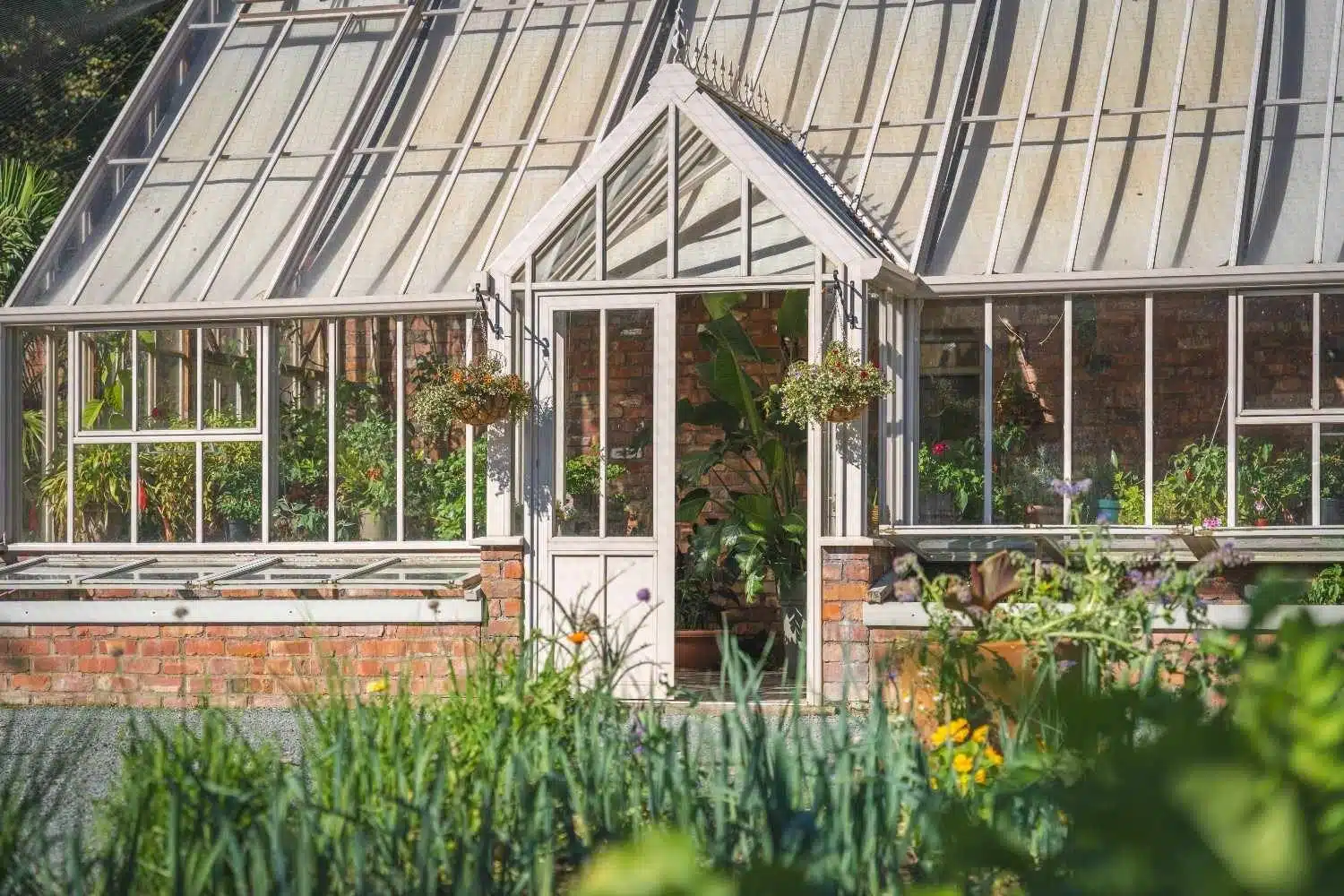
Edwardian Conservatory
The Edwardian style was a deliberate simplification of the Victorian. It features a square or rectangular floor plan with a flat front, clean lines, and minimal ornamentation. The roof is a hipped design with a high central ridge—steeply pitched for maximum headroom and light, but without the bay projection.
This is the most space-efficient traditional conservatory style. Every square foot of floor area is usable, making it ideal for dining tables, sectional sofas, and other full-size furniture that struggles to fit in angled corners. The neutral rectangular geometry also adapts easily to both traditional and contemporary homes.
A note on “Georgian” conservatories: In practice, Georgian and Edwardian conservatories are structurally identical—both rectangular, flat-fronted, with hipped roofs. Where manufacturers distinguish them, the difference is decorative: Georgian versions add internal glazing bars that subdivide panes into smaller rectangular grids, mimicking 18th-century sash window aesthetics. The structure underneath is the same.
Best for: Any home style. The best choice when maximizing usable floor space is the priority.
Lean-To Conservatory
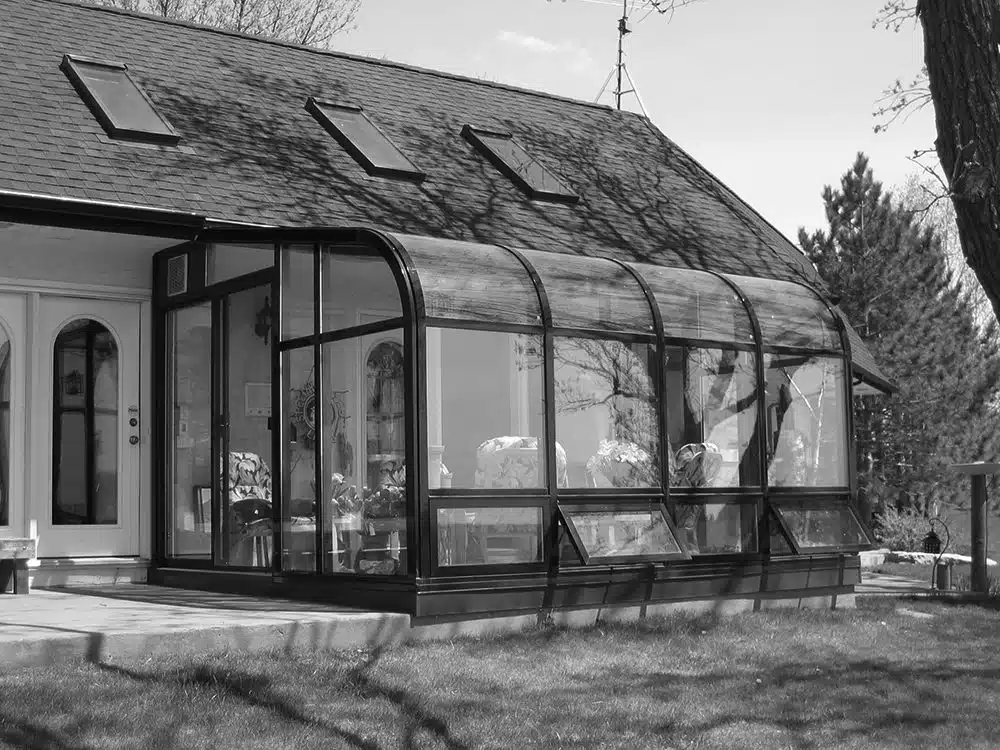
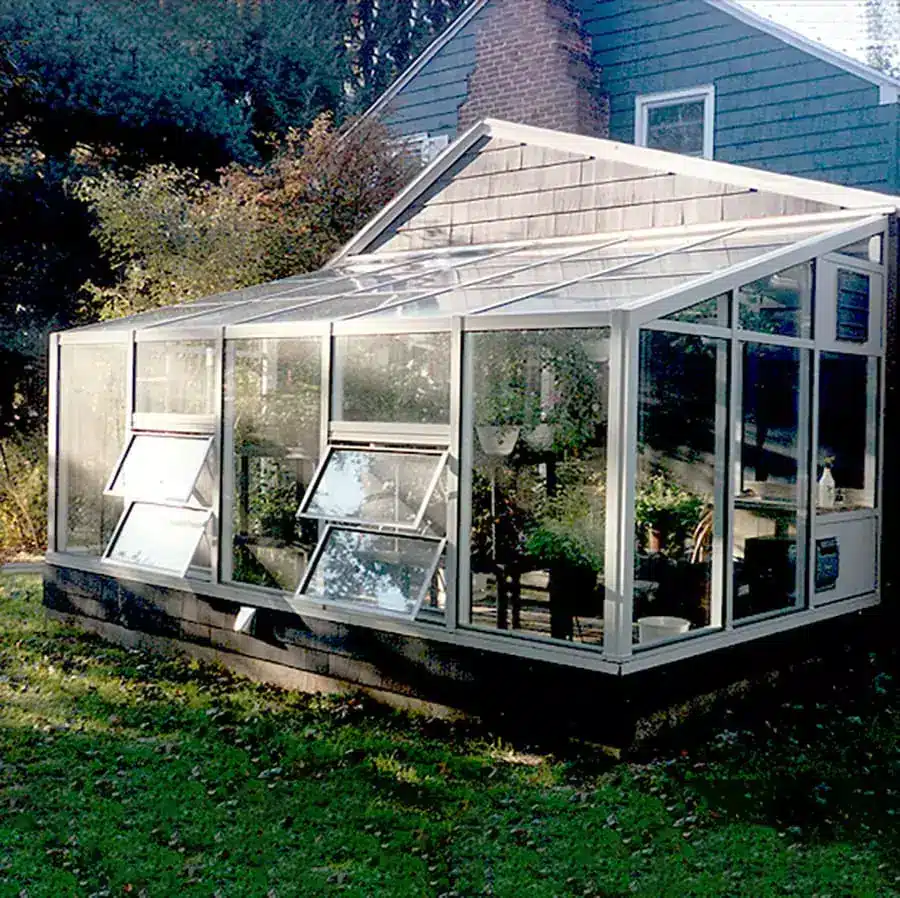
Also called a studio, sun lounge, or Mediterranean conservatory, the lean-to is the simplest style structurally. It features a single-slope roof that attaches at a higher point on the house wall and slopes downward to the outer wall. No ridge, no peak—just one clean plane of roof.
The lean-to is the most affordable conservatory style because its single roof plane requires fewer components, fewer joints, and less labor. Water drainage is straightforward—one direction, one drip edge, no valleys. The main limitation is headroom: the ceiling gets progressively lower as you move away from the house, which constrains how deep the room can be before the outer wall becomes uncomfortably short.
Best for: Bungalows, homes with low eaves, narrow side extensions, and budget-conscious projects. Ideal for contemporary and craftsman-style homes where a simple roofline reads well.
Gable-End Conservatory
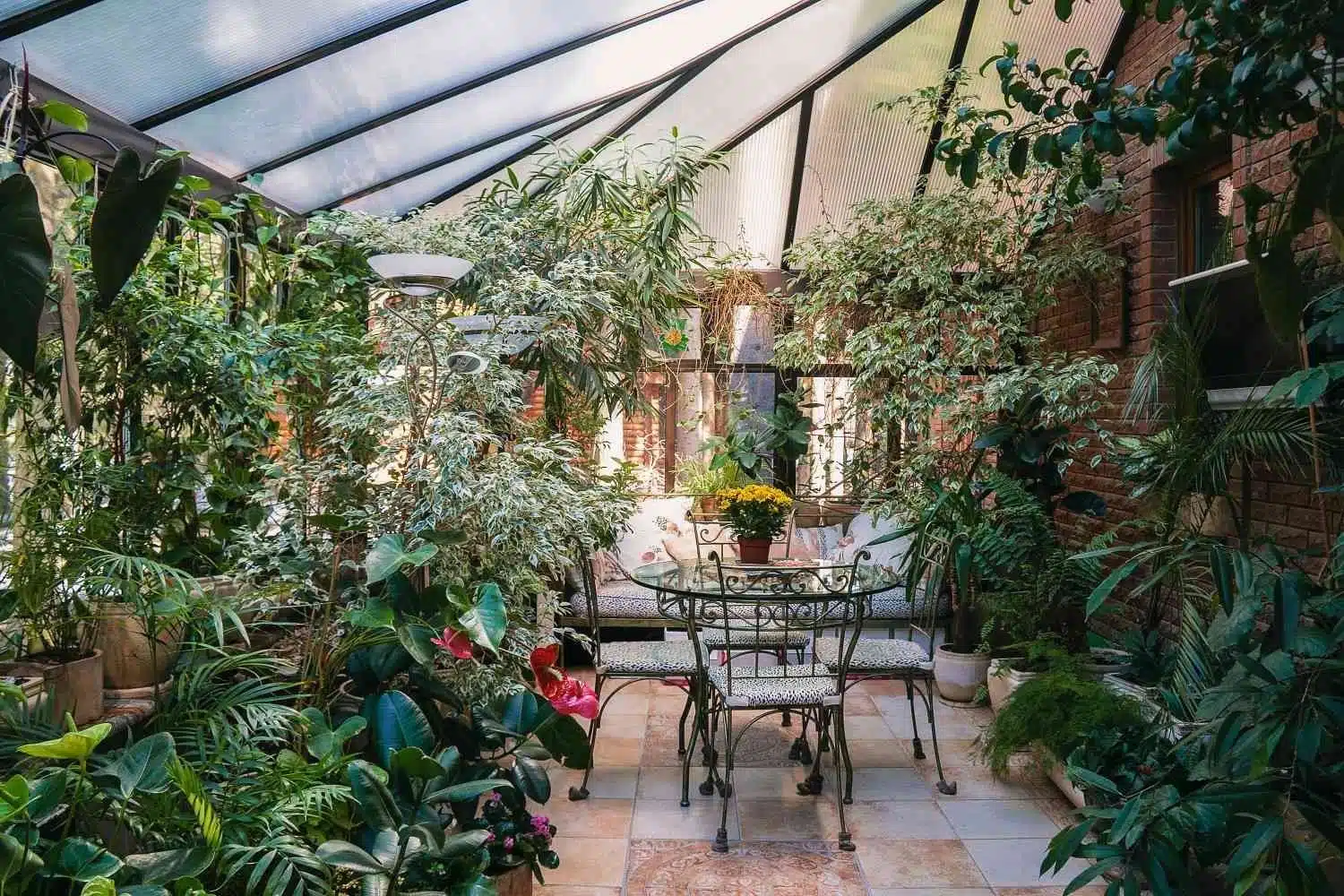
A gable-end conservatory has a rectangular floor plan similar to the Edwardian but with one key difference: the front elevation rises to a full triangular gable rather than a hipped slope. The ridge runs all the way to the front face, and that entire triangular front wall is available for floor-to-apex glazing.
The result is a striking sense of height and volume. Light pours in through the glazed gable, creating a bright, airy interior that feels significantly more spacious than a hipped-roof room of the same footprint. The gable also makes a bold architectural statement from the garden side.
Best for: Detached and semi-detached homes where height and visual drama are desired. Works well on taller facades where the gable proportion reads naturally.
Octagonal Conservatory
An octagonal conservatory features an eight-sided floor plan—sometimes as a standalone structure, sometimes as a distinctive section integrated into a larger design. The multi-faceted walls create panoramic views in every direction, and the symmetrical roof rises to a central apex.
This style works particularly well as a focal-point garden room or a feature element within a larger conservatory layout. The geometric symmetry gives it a classical, pavilion-like character. The trade-off is similar to the Victorian bay—angled walls reduce the efficiency of furniture placement compared to a rectangular room.
Best for: Properties with space for a standalone garden room or as a feature section within a larger conservatory. Suits formal gardens and properties where architectural distinction matters.
P-Shaped and T-Shaped Conservatories
These are combination designs that merge two styles into one larger structure.
P-Shaped: A longer rectangular section (typically Edwardian or lean-to) runs along the back of the house, with a smaller bay-fronted Victorian section projecting outward at one end. Viewed from above, the floor plan resembles the letter P. The two sections create naturally differentiated zones—dining in the rectangular area, lounging in the bay—without partition walls.
T-Shaped: A long rectangular section runs parallel to the house, with a central projection extending outward from the middle. This creates three functional zones: the two ends of the long bar and the projecting center section. It’s the largest-footprint standard conservatory form.
Both styles involve compound roof junctions where the two sections meet, making them more complex and expensive to build than any single-style design. T-shaped conservatories are the most structurally complex of the standard forms.
Best for: Larger properties with wide rear elevations where the owner wants multiple functional zones in a single open-plan structure.
Orangery
An orangery is technically not a conservatory—it’s a distinct building type. The key structural difference is the roof: an orangery has a solid perimeter roof (flat or low-pitch) surrounding a central glazed lantern that provides overhead natural light. The walls incorporate substantially more solid construction—brick, rendered masonry, or structural columns between large windows—giving the room the feel of a traditional extension rather than a glass structure.
The practical result: orangeries are warmer in winter and cooler in summer than fully glazed conservatories, thanks to the greater proportion of insulated solid structure. They’re also the most expensive option, with premium materials, specialist lantern roofing, and higher-grade insulation driving costs well above a standard conservatory of the same size.
Historically, orangeries predate conservatories entirely. They originated in 17th-century Europe as heated structures for overwintering citrus trees on wealthy estates. The modern orangery is a reinvention—blending that original masonry aesthetic with contemporary glazing technology.
Best for: Period homes, Georgian and Victorian architecture, or substantial modern homes where the owner wants a premium, year-round living space with more architectural weight than a glass conservatory.
Lantern-Style Conservatory
A lantern-style conservatory features a two-tiered roof: a standard hipped or flat perimeter section topped with a raised glazed “lantern” structure at the center. The lantern—a small, elevated glazed box or pyramid—brings in additional light from above and creates a dramatic sense of height inside.
This style bridges the gap between a standard conservatory and an orangery. It can be applied to an otherwise conventional conservatory to add architectural interest, or it can define the roof of a more solid orangery-style structure. The vertical glass faces of the lantern bring in side-light that a standard sloped roof can’t, making the interior feel taller and brighter than the footprint might suggest.
Best for: Contemporary and traditional homes with flat or low-pitch rear roofs. Excellent for adding height and drama to an otherwise simple extension.
How the Styles Compare at a Glance
| Style | Floor Plan | Roof Type | Floor Space Efficiency | Relative Cost |
| Victorian | Bay-fronted (3 or 5 facets) | Multi-faceted hipped | Moderate (angled corners) | Mid-range |
| Edwardian/Georgian | Rectangular | Hipped ridge | Highest | Mid-range |
| Lean-to | Rectangular | Single slope | Highest | Lowest |
| Gable-end | Rectangular | Ridge with full gable front | High | Mid to high |
| Octagonal | Eight-sided | Symmetrical apex | Moderate | Mid to high |
| P-Shaped | Compound (rectangle + bay) | Compound hipped | High (large total area) | High |
| T-Shaped | Compound (cross shape) | Compound (most complex) | High (large total area) | Highest (standard) |
| Orangery | Rectangular (solid walls) | Solid perimeter + central lantern | High | Premium |
| Lantern | Varies | Two-tiered with raised lantern | Varies | Mid to premium |
Finding the Right Style for Your Home
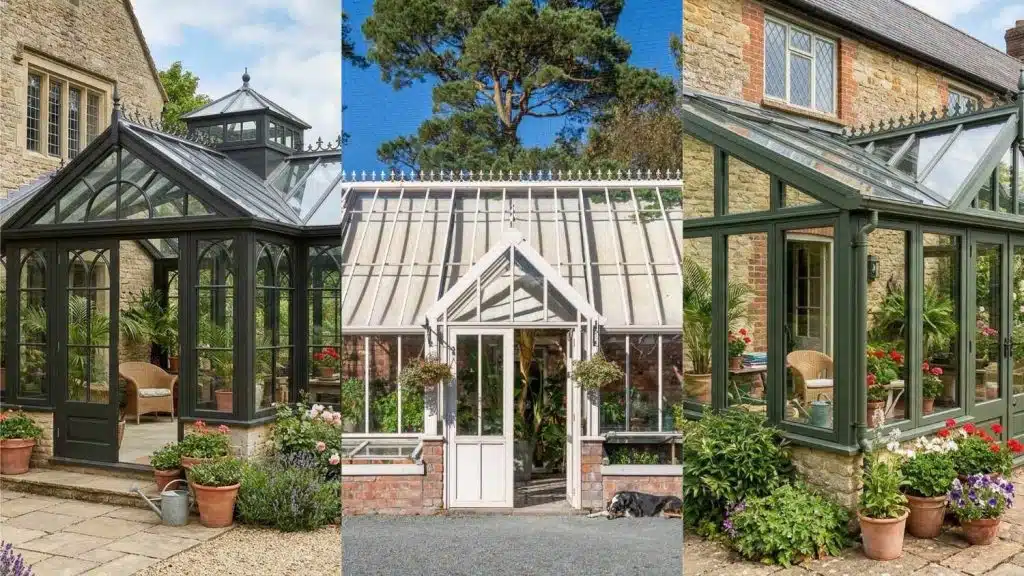
The best conservatory style balances your aesthetic preferences, the architecture of your home, how you plan to use the space, and your budget. A Victorian suits period homes where character matters. An Edwardian or lean-to maximizes usable space at a lower cost. A gable-end or lantern adds height and drama. An orangery delivers premium, year-round performance.
If you’re exploring conservatory options and want help matching a style to your home, the team at Sunshine Rooms designs and builds conservatories in over 200 standard configurations—including octagonal designs, radiused-end structures, and hipped-eave models—with custom options available for anything a standard model doesn’t cover. Reach out anytime to discuss which style fits your property and vision.
Related Posts

We Like to Hear From You!
We service and support the products we manufacture and install. If you need assistance with
our products or those of another sunroom manufacturer, contact us!